Hi, I’m Bo from Seoul With Me. There’s one thing about the palaces that generic guides bury three scrolls down, so I’ll put it first: if you show up in a full hanbok, you walk into every paying palace for free, all year round. A Gyeongbokgung ticket is only 3,000 won, so nobody’s saving a fortune — but the hanbok isn’t really about the discount. It’s that a photo of you in front of a 600-year-old throne hall, dressed the part, is the one souvenir visitors actually keep. The free entry is just the city nudging you to do it.
Below is how I’d actually plan a palace day: which of the five to pick when you don’t have time for all of them, when the 10,000-won combined ticket pays off, how to rent hanbok without landing in a tourist trap, and the two bookings-and-rules gotchas — Changdeokgung’s Secret Garden and the Bukchon fine — that catch people out. Prices and hours below are current for 2026 but do change, so confirm on the official palace site before you go.
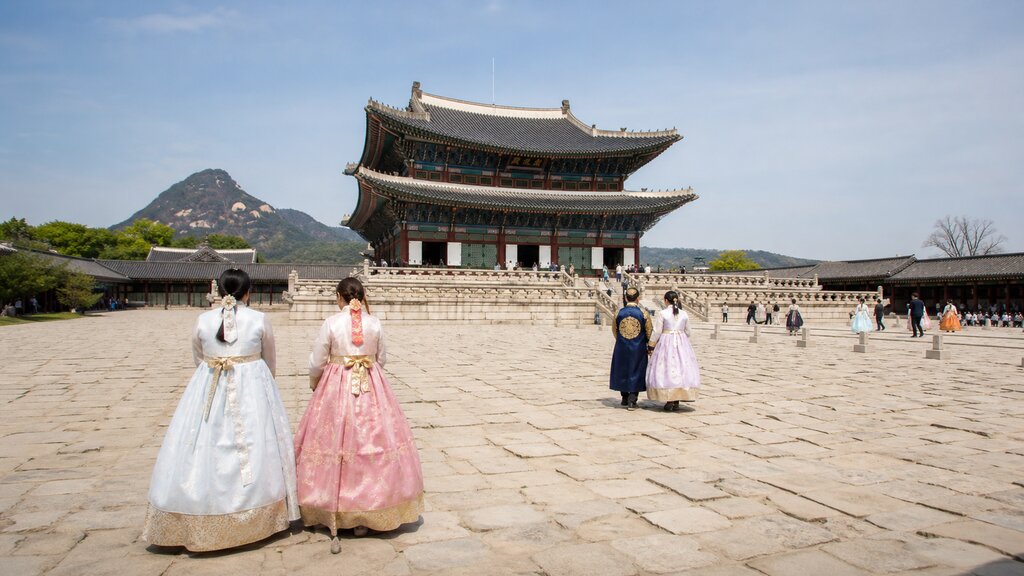
The five palaces, and which one to actually pick
Seoul has five grand palaces from the Joseon era, and you almost certainly don’t need to see all of them. Four charge admission — Gyeongbokgung, Changdeokgung, Changgyeonggung, and Deoksugung — and the fifth, Gyeonghuigung, is free and usually empty, which makes it a calm detour rather than a headline stop. Jongmyo, the royal ancestral shrine, isn’t a palace but sits in the same cluster and rides on the same combined ticket.
If you only see one, make it Gyeongbokgung. It’s the biggest, the most central, the founding palace of the dynasty, and the only one with the changing-of-the-guard ceremony out front. It’s also the one every hanbok rental shop is built around, so the whole “dress up, walk in free, take photos” plan clicks into place here with the least effort.
If you have time for two, pair Gyeongbokgung with Changdeokgung, whose Secret Garden — a landscaped rear garden built to follow the natural hillside rather than flatten it — is the single most beautiful stretch of any palace in Seoul. It needs a separate timed ticket, which I’ll get to, so it’s the one to plan around rather than wing.
For a third, I’d skip a fourth full palace and instead do Deoksugung in the late afternoon. It’s small, right by City Hall, and its stone-wall road alongside is a genuinely nice evening walk. The odd one out is Changgyeonggung, which physically connects to Changdeokgung through a shared back gate — if you’re already inside Changdeokgung and have energy left, you can drift into it without leaving for the street, which is the only time I’d bother with it. The mistake I watch visitors make is trying to cram all four paid palaces into a day — by the third you’re just walking past old buildings you’re too tired to look at. Two well, plus a short evening one, beats four in a blur.
Tickets: single visit vs the 10,000-won combined ticket
Individual admission is cheap. Gyeongbokgung is 3,000 won for adults and 1,500 won for youth aged 7 to 18. Kids 6 and under, visitors 65 and over, and — the part worth repeating — anyone in hanbok get in free. So for a lot of people the math never even gets complicated.
The Integrated Palace Ticket costs 10,000 won, stays valid for three months, and covers all four paid palaces plus Jongmyo. It only makes sense if you’ll hit three or more of those sites; buy it for two and you’ve overpaid. Since I just told you to see one or two palaces, the combined ticket is really for the traveler doing a deliberate history run over several days, or a family spacing visits across a longer stay — the three-month window is the useful part there.
And the loophole one more time, because it changes the calculation entirely: hanbok gets you into every paying palace for free, year-round. If you’re renting hanbok for Gyeongbokgung anyway and then hopping to Changdeokgung the same afternoon, you skip both admissions on the clothes alone. Prices can shift, so check the official palace site before counting on any figure here.
Renting hanbok without the tourist-trap feeling
The rental shops cluster tightly around Gyeongbokgung — along the Samcheong-dong side and over in Insadong — so you rent, change, and you’re at the palace gate within minutes. Expect roughly 15,000–25,000 won for about 2 hours and 25,000–40,000 won for about 4 hours. Two hours is enough for Gyeongbokgung alone at a relaxed pace; go for four if you’re photographing seriously or chaining a second palace.
A few practicalities that shops rarely spell out until you’re inside. Hair styling — a quick updo, a hairpin set — is usually a small add-on rather than included, so ask before you assume. Most shops store your bags and coat while you’re out, which is why people happily wander for hours, and many will hold an ID or a small deposit until you return the outfit. Booking online is often a bit cheaper and locks in a size, but walk-ins are genuinely fine here; on a normal day you won’t be turned away. One thing worth doing before you commit: step outside the shop and look at the outfit in daylight rather than the shop’s warm lighting, because the colors read differently against the grey palace stone, and the greens and deep blues tend to photograph better there than the pale pastels everyone reaches for first.
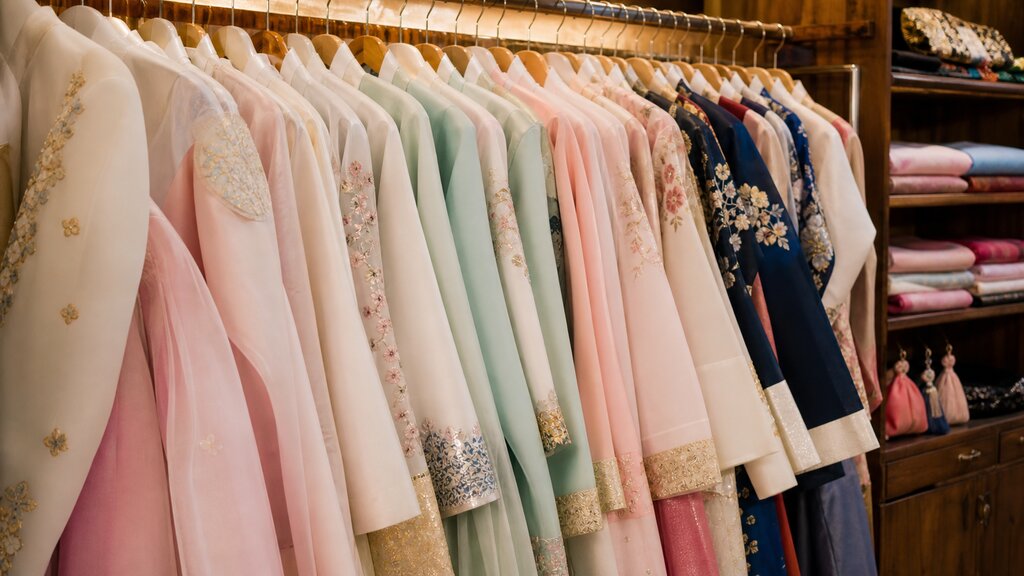
Two things I’d flag so free entry actually works. First, it has to be a full hanbok set — a top plus a skirt or trousers. A casual hanbok-style blouse worn with your own jeans is a nice look but won’t get you the free ticket; the staff at the gate check for the real set. Second, comfort: most modern rentals are polyester, so they’re light and photograph beautifully but don’t breathe much. In a Seoul July that matters — pick the shorter two-hour slot in high summer, and in winter wear proper layers underneath, because the skirts are airier than they look.
Gyeongbokgung: hours, the Tuesday closure, and the guard ceremony
Gyeongbokgung’s hours move with the season, and the last-entry cutoff is the part people miss. November to February it’s 09:00–17:00 (last entry 16:00); March to May and September to October it’s 09:00–18:00 (last entry 17:00); June to August it stretches to 09:00–18:30 (last entry 17:30). Show up 20 minutes before closing and you’ll be turned away at the ticket window — that hour of buffer isn’t optional.
The one closure to burn into your memory: Gyeongbokgung is shut on Tuesdays, not Mondays like most museums. If a Tuesday lands on a public holiday, it opens that day and closes the next instead. So don’t build your whole palace plan around a Tuesday and then act surprised.
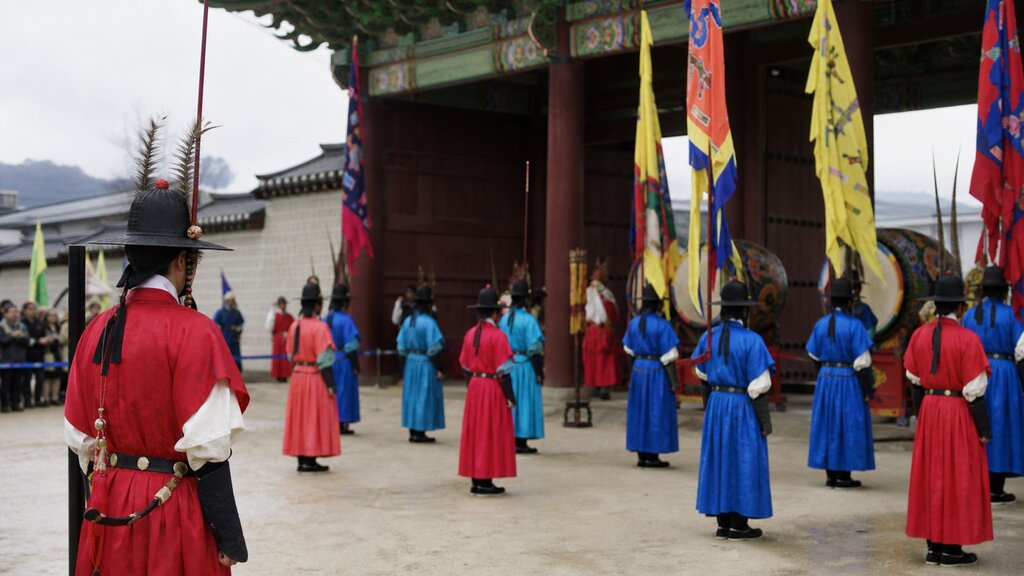
Time your visit around the changing-of-the-guard ceremony at Gwanghwamun Gate, held at 10:00 and 14:00 and running about 20 minutes, with shorter gate-guard-duty performances around 11:00 and 13:00. It’s in period uniform with drums and banners, and it’s the best free spectacle at any palace — but it doesn’t run on Tuesdays either, which is a second reason that day is a write-off. My move: arrive for the 10:00 ceremony, tour the grounds while it’s still cool, and you’re done before the midday crowds thicken.
Getting there is the simplest part of the day: Gyeongbokgung has its own subway stop (Line 3), and the palace exit puts you at the gate. If you haven’t sorted your fare card yet, I walked through the options in the Seoul transport card guide.
Changdeokgung and the Secret Garden reservation you’ll wish you’d made
Here’s the booking that trips up more visitors than any other. Changdeokgung’s Secret Garden (Huwon) can only be entered on a timed guided tour, and it needs a separate ticket on top of regular Changdeokgung admission. You cannot just wander in — the garden is protected, so it’s guided-tour access only.
Capacity is deliberately capped at around 100 people per session: roughly 50 bookable online from six days ahead, and about 50 held for on-site sale the same day. English-language tours run about 1.5 hours, and from February to November they’re scheduled roughly at 10:30, 11:30, 14:30, and 15:30, thinning out in December and January. The tour is a walk at the guide’s pace, not a free roam — you follow a set loop past the lotus pond and the pavilions and back, so factor the full 90 minutes into your afternoon rather than assuming you can duck out early. In peak seasons — spring blossoms, autumn foliage — the online slots sell out and the on-site queue forms early. If the Secret Garden is on your list, book online the moment your six-day window opens; leaving it to the door in October is how people end up standing outside a garden they traveled to see. Confirm the current tour times on the official palace site, since the schedule shifts by season.
Bukchon Hanok Village: real homes, real rules
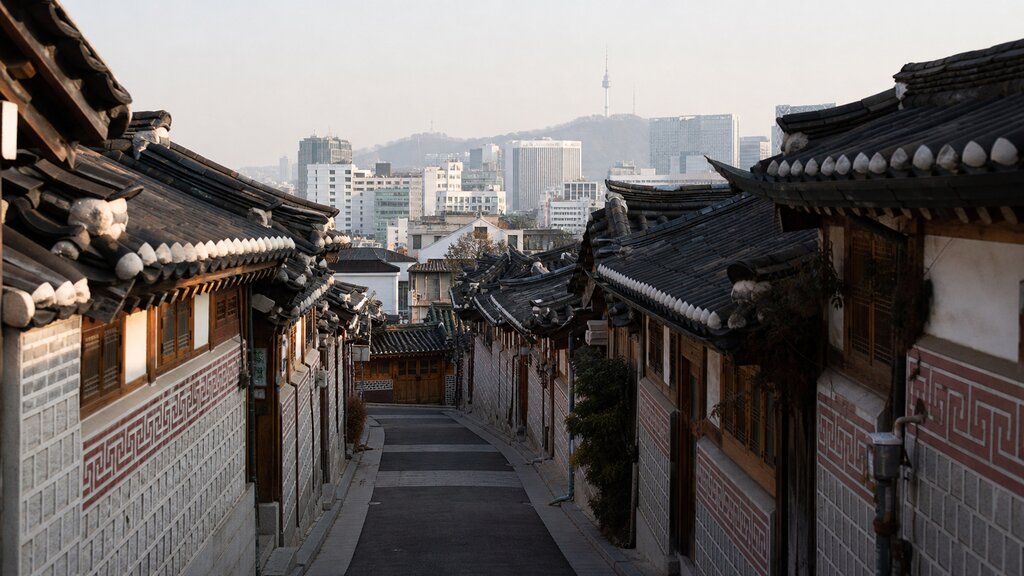
Bukchon Hanok Village sits right between Gyeongbokgung and Changdeokgung, which is exactly why it gets misunderstood. It photographs like an open-air museum — sloping tiled roofs, narrow stone lanes, the modern skyline stacked behind — but it is a working residential neighborhood where people actually live. That gap between how it looks and what it is causes most of the friction.
So the district now runs on posted rules, and they have teeth. Official visiting hours are 10:00–17:00; the restricted residential lanes are off-limits from 17:00 to 10:00, and violations in the restricted Gahoe-dong area can bring a fine of up to 100,000 won. This isn’t a suggestion painted on a sign — residents were losing their evenings to camera flashes and rolling suitcases, so the city gave the limits real consequences.
The right way to visit is what’s called “silent tourism”: keep your voice down, don’t film into homes even when a door is standing open, and keep your group small. Treat the front gate you’re posing beside as someone’s actual front door, because it is. This threads straight into the wider point I made in the Seoul etiquette guide — the small habits that mark you as a considerate visitor rather than a nuisance. Bukchon is where those habits stop being abstract and start mattering to the person trying to sleep behind that wall.
Making it a full day
A palace morning leaves your afternoon and evening open, and the geography does you a favor. From Gyeongbokgung it’s a short ride down to Myeongdong for food, cosmetics, and street stalls — I mapped the whole area, hard-sell touts and all, in the Myeongdong guide. Between palace tickets, hanbok rental, and lunch you won’t spend much, but if you want a realistic sense of what a day like this costs, I broke down cards, cash, and budgeting in the Seoul money guide.
A local’s honest close
If you take one thing from all of this: rent the hanbok, do it at Gyeongbokgung, arrive for the 10:00 ceremony, and book the Secret Garden ahead if Changdeokgung is on your list. That’s the version of the palace day that goes smoothly. The rest — a second palace, an evening walk at Deoksugung, a wander through Bukchon — you can play by ear once you’re there and reading your own energy.
And I mean the hanbok part sincerely, not as a checklist item. It’s cheap, the free entry is a small bonus, and the photos are the thing you’ll still be looking at years later. The palaces are worth seeing in your own clothes too. They’re just a little more worth it in the right ones. Prices and hours here can change, so give the official palace site a quick check before you set out.
— Bo
FAQ
Is hanbok really free entry to Seoul palaces? Yes. Anyone wearing hanbok gets in free to all four paying palaces, year-round — no special pass needed. It has to be a full set (top plus skirt or trousers); a casual hanbok-style top with your own clothes doesn’t qualify, since staff check at the gate.
Which Seoul palace should I visit first? Gyeongbokgung. It’s the largest and most central, it’s the founding palace, and it’s the only one with the changing-of-the-guard ceremony. If you have time for a second, add Changdeokgung for its Secret Garden.
Do I need to book Changdeokgung’s Secret Garden in advance? In busy seasons, yes. The garden is timed-guided-tour only with a separate ticket, capped near 100 people per session — about half bookable online six days ahead, half sold on-site. Spring and autumn slots sell out, so book online the moment your window opens.
Are Seoul palaces open on Mondays? Most palaces close on Mondays, but Gyeongbokgung and Deoksugung close on Tuesdays instead — so on any given day at least one palace is open. Because closures vary, confirm your specific palace on the official site before you go.
Planning your first Seoul trip? Start at the first-time-in-Seoul hub, or send a question through the Contact page.