Hi, I’m Bo, the local voice behind Seoul With Me. Today I’m writing
about Myeongdong from the perspective of someone who lives here and
actually has to explain this neighborhood clearly to every foreign
friend visiting Seoul for the first time.
Myeongdong is the neighborhood that almost everyone visits on their
first day. It’s not the most local part of Seoul — it’s deliberately
built for tourists. But that’s exactly why it works for first-timers:
signs are bilingual, staff speak basic English, and everything you need
is within a short walk.
What Is Myeongdong?
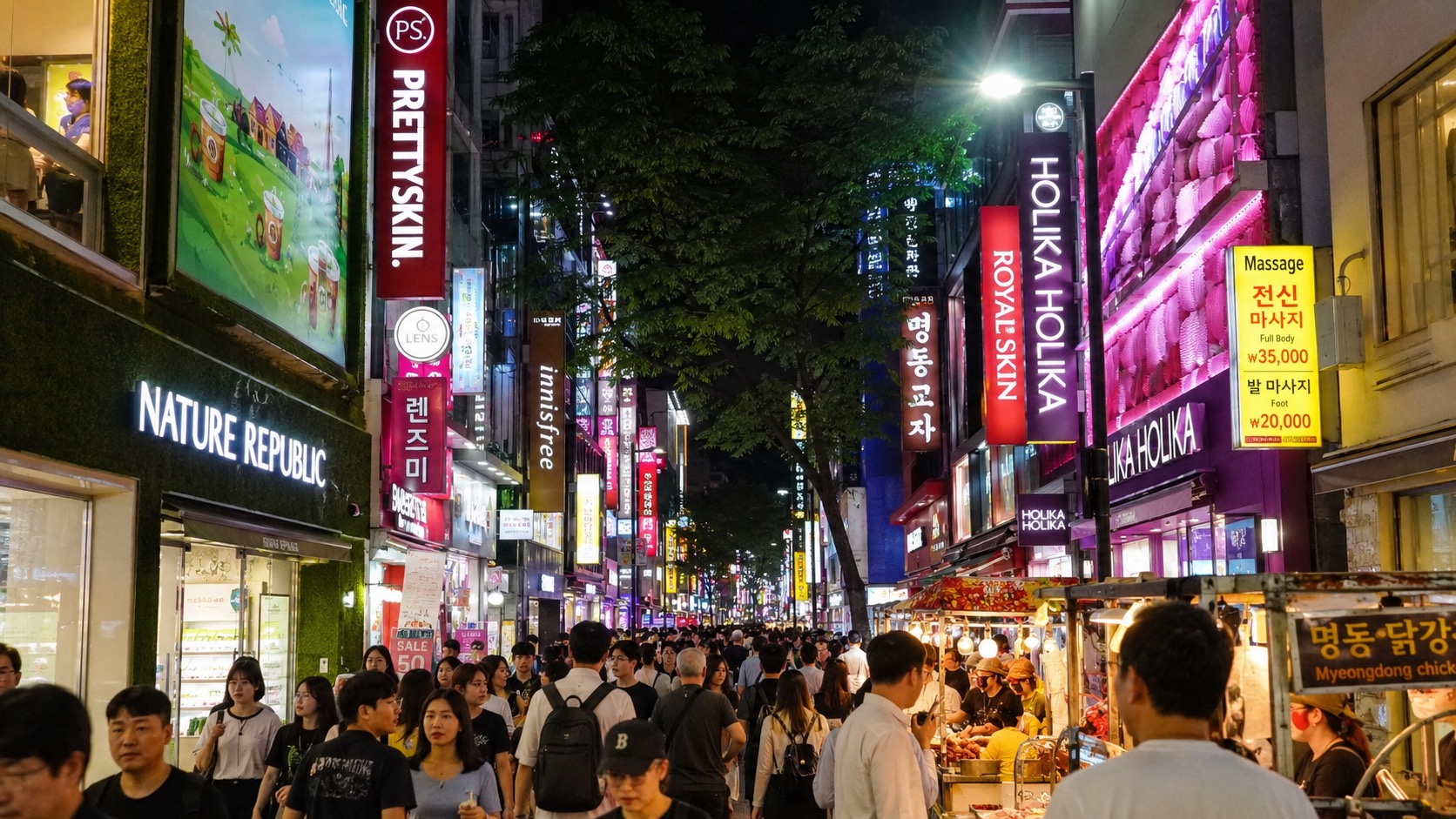
Myeongdong (명동) sits in Jung-gu, central Seoul, about 10 to 12
kilometers from Incheon Airport by fast transit. It covers roughly 6
blocks of a pedestrian-priority main street surrounded by side alleys,
department stores, and a small Catholic cathedral hill at its northern
end.
The character of the neighborhood has shifted over the past few
years. Post-pandemic, many domestic Korean shoppers moved toward
Hongdae, Seongsu, or online platforms. What remained in Myeongdong is
almost entirely tourist-facing: K-beauty chains, street food carts,
currency exchange booths, tax refund offices, and duty-free department
stores.
I mention this not to discourage you from going — you should go — but
so you walk in knowing what it is. Myeongdong is one of the most
efficient places in Seoul to buy K-beauty products, eat popular street
food, and request a tax refund all in the same afternoon.
Getting to Myeongdong
The most direct option from anywhere in central Seoul is
Myeongdong Station (명동역) on Seoul Metro Line
4 (the light blue line). The station is directly under the main
shopping street. Take Exit 5 or Exit 6 for the main pedestrian zone.
Line 2 (the green line) also connects at City Hall Station
(시청역), which is a 10-minute walk from Myeongdong’s southern
entrance. This works well if you’re coming from Gangnam via Line 2 and
don’t want to transfer.
From Incheon Airport, the most common routes are: –
AREX Express → Seoul Station → Line 4 to Myeongdong Station (about 50
minutes total) – AREX All-Stop → Gimpo Airport → Line 5 to transfer to
Line 4
For a full breakdown of every airport-to-Myeongdong option including
bus and taxi, see the Incheon
Airport to Myeongdong guide.
If you’ve just landed and are unsure which transit card to get before
heading to Myeongdong, the Seoul transportation card
guide covers T-money and Climate Card options with a simple decision
guide.
If you’re staying in Myeongdong: Several hotels sit
within the Myeongdong pedestrian zone itself. If you’re deciding where
to book your first Seoul stay, the first-time Seoul accommodation
guide walks through why Myeongdong is one of the most convenient
choices for first-time visitors.
Buses: Multiple city buses stop at Myeongdong or pass through on the
adjacent roads. But for a first visit, the Line 4 subway is the clearest
option.
K-Beauty Shopping in
Myeongdong
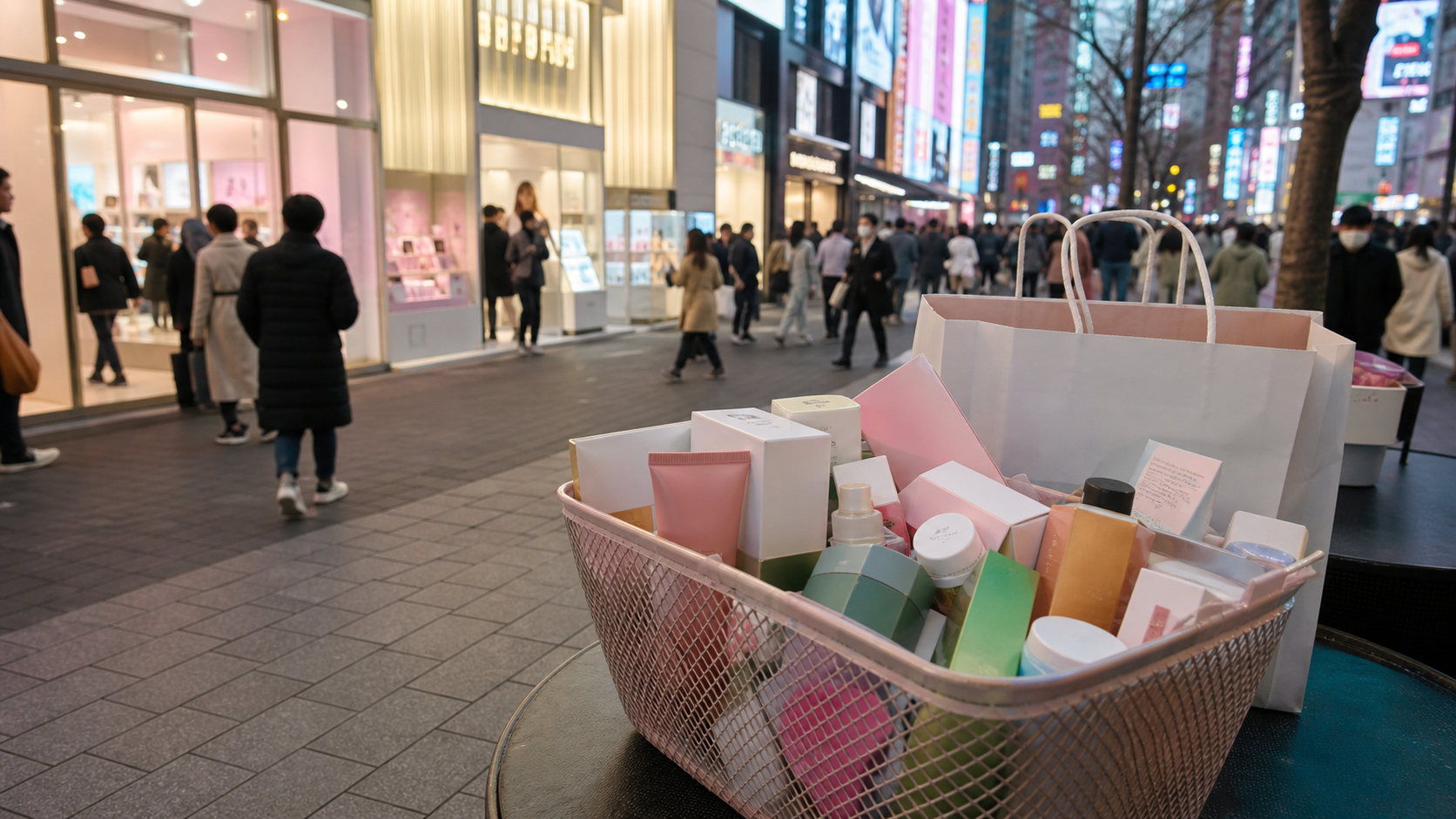
This is probably why you came. Myeongdong’s main street and its side
alleys are dense with K-beauty flagships and brand stores. A short walk
covers Innisfree, Etude House, Laneige, The Face Shop, Nature Republic,
Skinfood, Missha, and several others.
A few things that help in practice:
Olive Young is worth knowing before you go. It’s the
Korean equivalent of a Sephora or Ulta — a multi-brand beauty retailer
that stocks Korean brands alongside imported ones, including trending
items that aren’t always available at individual brand stores. The
flagship Myeongdong branch (there are several in the neighborhood) tends
to have longer hours and broader stock than the Sinchon or Hongdae
locations. If you want more detail on what’s worth buying and which
items are good value for tax refund, the Olive Young Seoul shopping
guide covers it directly.
Lotte Duty Free and Shinsegae Duty
Free both have entrances near Myeongdong. These require
passport registration and have different purchase rules than regular
shops, but offer price advantages on luxury brands and some Korean
brands if you’re spending a certain threshold. Worth considering if your
budget is higher or you’re shopping for gifts.
Brand-specific flagships often run exclusive in-store promotions that
aren’t on the online shop. If you see a promotion sign and it mentions
“in-store only” or “today only,” that’s usually real, not a sales
gimmick.
Street Food to Try
The Myeongdong main street turns into an outdoor food corridor in the
late afternoon and evening, with carts setting up from around 4 PM. Most
sell for cash only; a few accept card.
Things worth trying:
- Tteokbokki (떡볶이): Spicy rice cakes in a red
sauce. Served in small paper cups or on skewers. If you want a milder
version, look for a cart with a “mild” label or ask — most vendors have
some English signage. - Hotteok (호떡): A fried dough filled with brown
sugar, cinnamon, and chopped peanuts. One of the few street foods here
that’s also popular with Koreans rather than purely tourist-facing. - Gyeran-ppang (계란빵): A waffle-style bread baked
with a whole egg inside. Usually costs 1,000–2,000 KRW. Cheap, filling,
and actually good. - Corn dog / Haemul pajeon sticks: Various deep-fried
variations on a stick. Prices have crept up in the past two years;
expect 4,000–7,000 KRW for the loaded versions. - Tanghuru (탕후루): Candied fruit on a skewer.
You’ll see these everywhere in Myeongdong now. The original form uses
hawthorn fruit; the ones here are usually strawberry or grape.
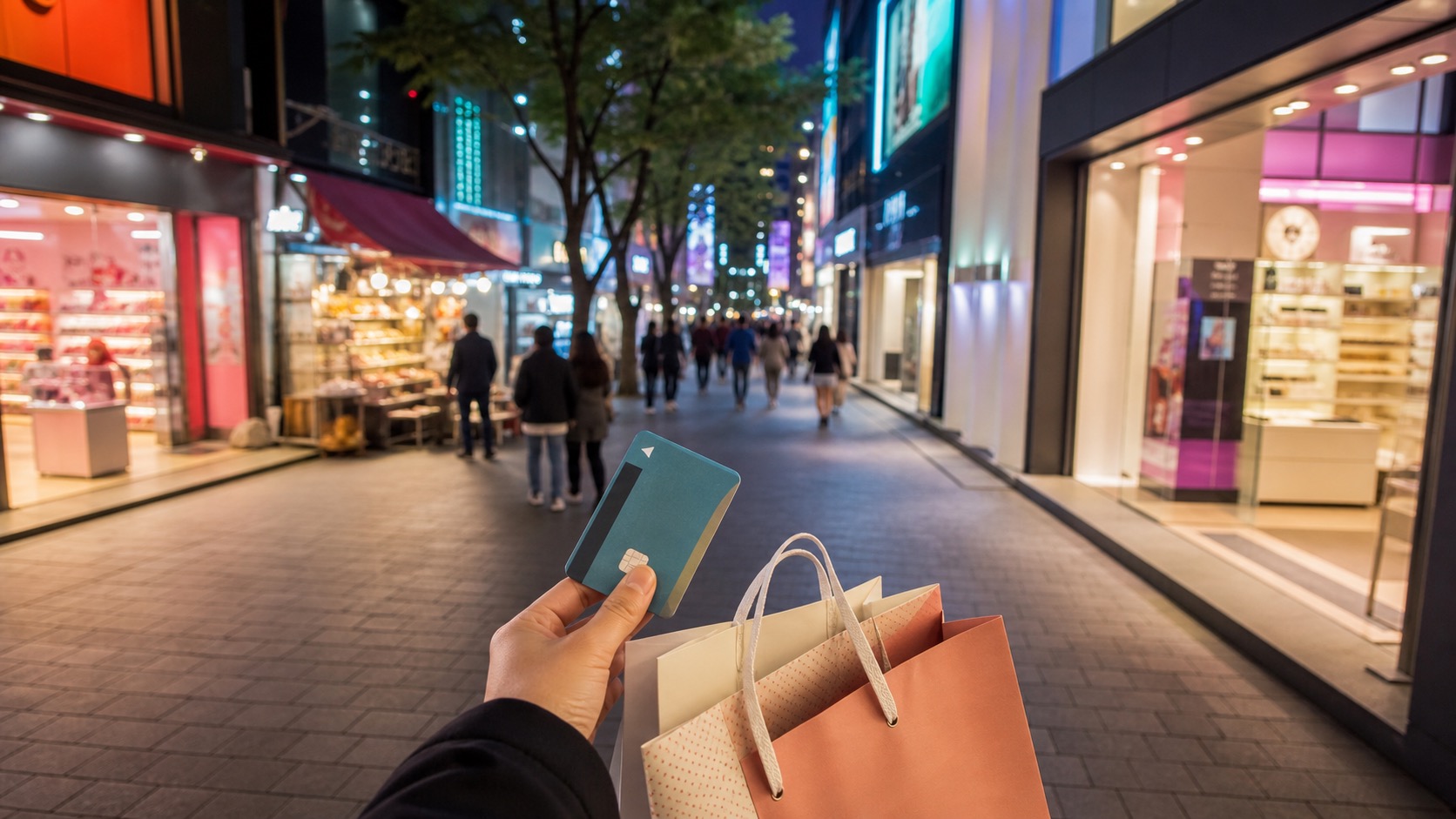
Most food is priced between 2,000 and 6,000 KRW per item. A
card-heavy traveler might run into issues at smaller carts — keep
10,000–20,000 KRW in small bills for street food.
Tax Refund Guide
Myeongdong is one of the best areas in Seoul to request a tax refund
because almost every store participates in the immediate refund
scheme.
There are two main systems:
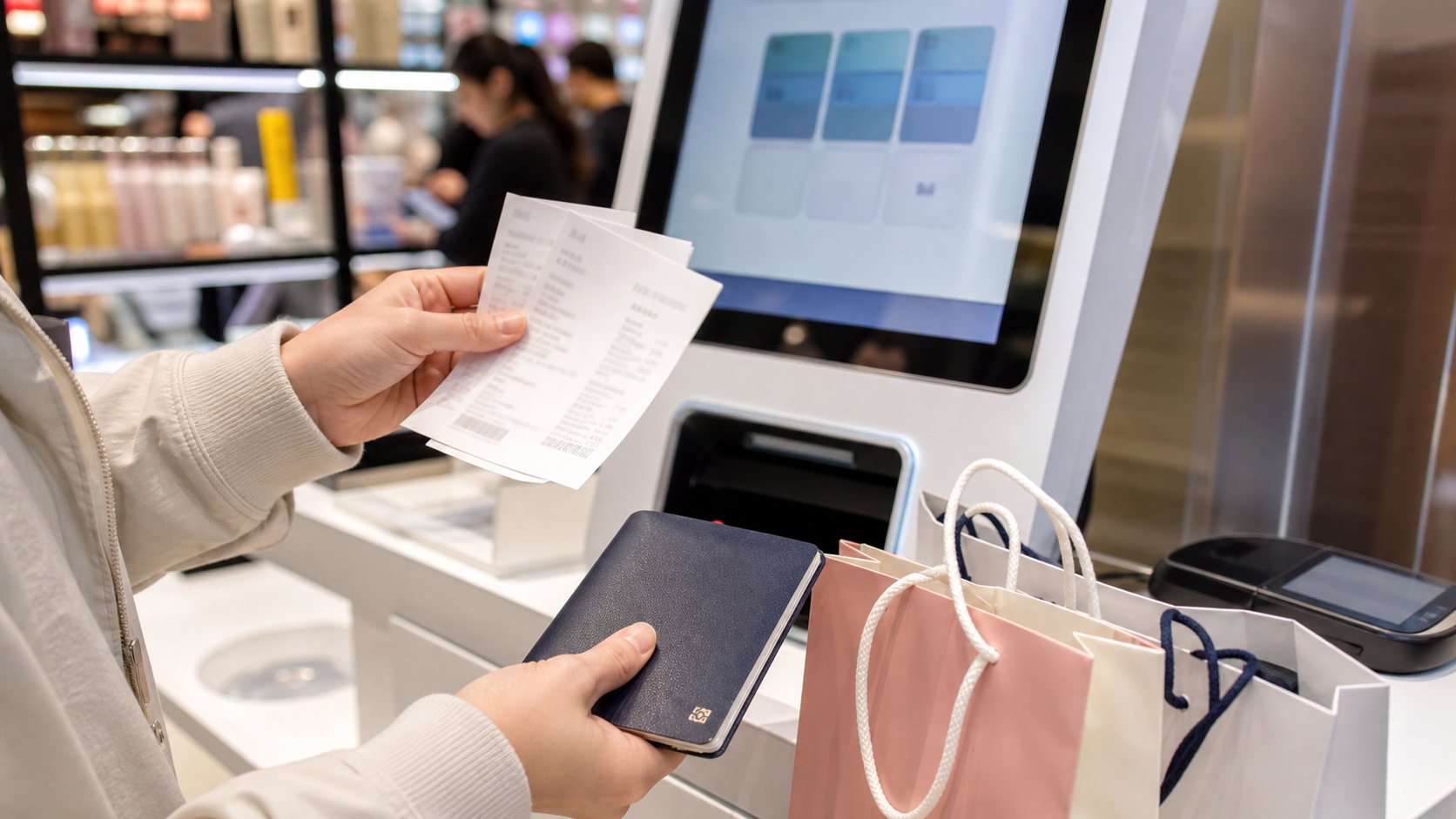
Immediate refund (즉시환급, Jeuksi Hwangeubyeoung):
If you show your passport at checkout and the store is registered, they
refund the VAT (usually 9–11% of the purchase price) directly at the
register. No paperwork to hold and no airport queue for this portion.
Most major K-beauty chains and department stores in Myeongdong
participate.
Post-refund (사후환급): For stores that don’t do
immediate refund, you receive a refund receipt. You present these at the
airport’s customs refund counter before check-in. You need the goods
with you (not in checked luggage yet), so plan accordingly.
Practical notes: – The minimum purchase amount per
receipt for a tax refund is 30,000 KRW. – You need to show your passport
at the point of purchase — not a photo, the physical document. – Some
stores will split purchases across receipts to keep items under refund
limits. Ask if you’re buying multiple items. – The refund amount is
stated on the receipt before you leave the store. The airport counter’s
amount should match.
If you’re also shopping at Olive Young and want details on which
items qualify and how the immediate refund works there specifically, the
Olive Young Seoul shopping
guide has a step-by-step section on the tax refund process
in-store.
Best Time to Visit
Daytime vs. evening: Myeongdong during the day
(before 4 PM) is noticeably less crowded. Stores are open, street food
carts are mostly not set up yet, and you can browse without being
shoulder-to-shoulder with other shoppers. If your main goal is buying
skincare products and you want to compare without rushing, go between 11
AM and 3 PM.
Evening from 5 PM onward is when the neighborhood becomes the
Myeongdong most people picture: street food everywhere, neon signs fully
lit, dense crowds. It’s more of an experience, but also harder to get
into popular stores without waiting or pushing through.
Weekday vs. weekend: Weekend evenings are noticeably
more crowded than weekday evenings. If you’re visiting Seoul for a week
and have flexibility, weekday afternoon shopping followed by an early
dinner is the quietest combination.
Seasons: Summer (July–August) and October are the
most crowded months due to international tourism peaks. The neighborhood
gets uncomfortably hot in August; plan outdoor street food time for
after 7 PM when the temperature drops. In winter (December–February),
the street food stalls are still running, and the warm bread and hotteok
are more appealing in the cold.
Tips for First-Time Visitors
Crowds and timing: Myeongdong’s pedestrian street
gets narrow fast during peak hours. If you’re traveling with luggage
directly from the airport, drop your bags at your hotel first before
doing any shopping — most hotels allow early bag drop even if your room
isn’t ready.
Luggage storage: Several luggage storage services
(물품 보관소) operate in and near Myeongdong Station. Prices are
typically 3,000–6,000 KRW per bag per day. This is worth using if you’re
coming from the airport and checking in later.
Currency exchange: Myeongdong has some of Seoul’s
most competitive currency exchange booths (환전소). The ones on the main
pedestrian street tend to offer slightly better rates than airport
exchange counters. You don’t need to exchange a large amount — most
major shops accept card — but having 30,000–50,000 KRW in cash is useful
for street food and small purchases.
English signage: Most stores in Myeongdong have
English-speaking or at least English-literate staff. Larger stores like
Olive Young and Innisfree have staff who can help you navigate the
product range in basic English. Don’t hesitate to ask.
What not to buy here: Electronics are cheaper at
Yongsan or online. Clothes at the Myeongdong brand stores are often
full-price; if you want fashion at a discount, Dongdaemun’s wholesale
markets or Hongdae’s indie stores are better options.
FAQ
Is Myeongdong safe for solo travelers at night? Yes.
Myeongdong is busy and well-lit until at least 10–11 PM most nights.
Seoul’s overall street safety is high, and Myeongdong specifically has a
large tourist presence and regular foot traffic through the evening.
Do I need to book anything in advance to visit
Myeongdong? No. It’s an open street shopping area. The only
things that benefit from advance planning are duty-free shopping (you
can register your passport online beforehand for some duty-free stores)
and dinner at specific restaurants if you want to eat somewhere popular
nearby.
Can I visit Myeongdong and Insadong in the same day?
Yes — they’re about 15 minutes apart on foot or one subway stop.
Insadong is best in the late morning; Myeongdong in the afternoon or
evening. A combined half-day covering both is manageable.
How long should I plan for Myeongdong? Budget at
minimum 2 hours for a focused shopping trip. 3–4 hours is more
comfortable if you’re doing K-beauty, street food, and tax refund. If
you’re doing department store or duty-free shopping, add another
hour.
Is the tax refund worth it on small purchases? On
individual K-beauty items under 30,000 KRW per receipt, there’s no
refund. But many purchases add up quickly — a basic skincare set at
Innisfree or Olive Young can easily hit 60,000–100,000 KRW. On a 100,000
KRW purchase, the refund is roughly 9,000–10,000 KRW. Worth showing your
passport at checkout.
What currency should I bring? Korean Won (KRW). Most
stores accept major credit cards (Visa, Mastercard, UnionPay), but
street food carts are mostly cash-only. The Myeongdong currency exchange
booths give competitive rates.