Hi, I’m Bo from Seoul With Me.
If you have three days in Seoul for your first trip, the biggest
mistake is not missing one famous place. It is trying to treat the city
like a checklist.
Seoul is wide, layered, and faster than it looks on a map. A palace
morning, a shopping street, a cafe neighborhood, a market dinner, and a
late-night walk can all fit into one trip. But if you force too many
distant areas into the same day, the trip starts to feel like subway
homework.
This is the 3-day Seoul itinerary I would give a friend visiting
Korea for the first time. It keeps the first day gentle, puts the
classic sights together, and saves one day for the modern side of the
city. It also assumes you want enough structure to avoid confusion, but
not so much structure that every hour feels assigned.
Before using this itinerary, I recommend sorting out three
basics:
- Your airport route, especially if you are going from Incheon
Airport to Myeongdong. - Your hotel area, using the where
to stay in Seoul guide. - Your transit card plan, using the Seoul
transportation card guide.
If those are already clear, this itinerary can become your first
simple Seoul plan.
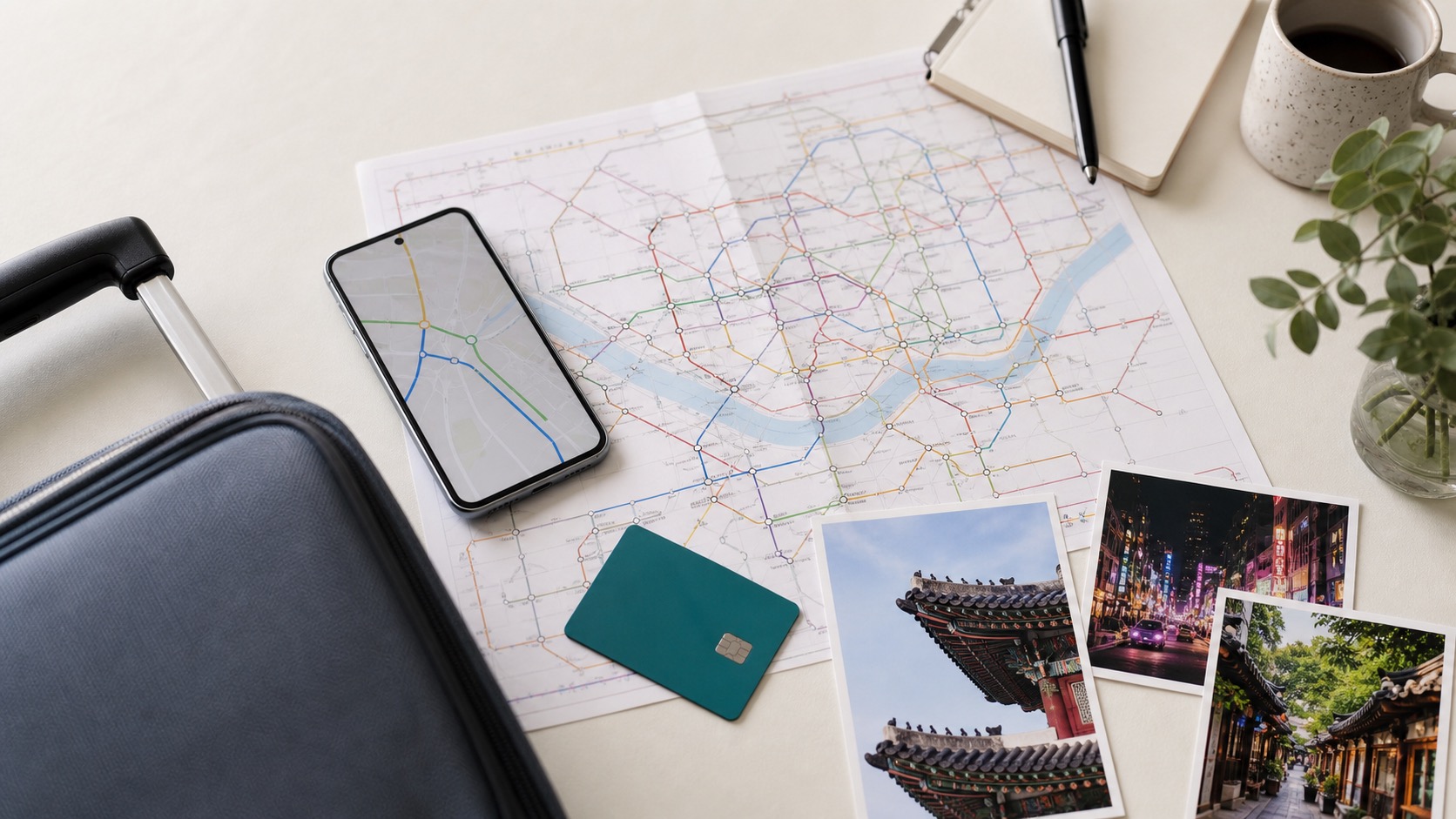
Quick Overview
| Day | Theme | Main Areas | Best For |
|---|---|---|---|
| Day 1 | Arrival and easy city rhythm | Hotel area, Myeongdong, Namsan or nearby shopping | Low-stress first evening |
| Day 2 | Classic Seoul | Gyeongbokgung, Bukchon, Insadong, Ikseon-dong, Gwangjang Market | Palaces, old streets, traditional Seoul |
| Day 3 | Modern Seoul | Choose Seongsu, Hongdae, Gangnam, or Han River route | Cafes, shopping, neighborhoods, nightlife |
My local rule: give each day one center of gravity.
You can add side stops, but each day should have one main area that
makes the route make sense.
Day 1: Arrive,
Settle In, and Keep Myeongdong Light
Arrival day should be easy on purpose.
Even if your flight lands on time, the first few hours can stretch.
Immigration, baggage, SIM or eSIM setup, transit cards, airport train or
bus, hotel check-in, and your first Korean street signs all take
attention. You do not need a heroic first day.
If you are staying in Myeongdong, use the evening for a simple
loop:
- Check in or leave your luggage.
- Walk through Myeongdong’s main streets.
- Buy basic travel items if needed.
- Eat something close to your hotel.
- If you still have energy, add Namsan or a short nearby walk.
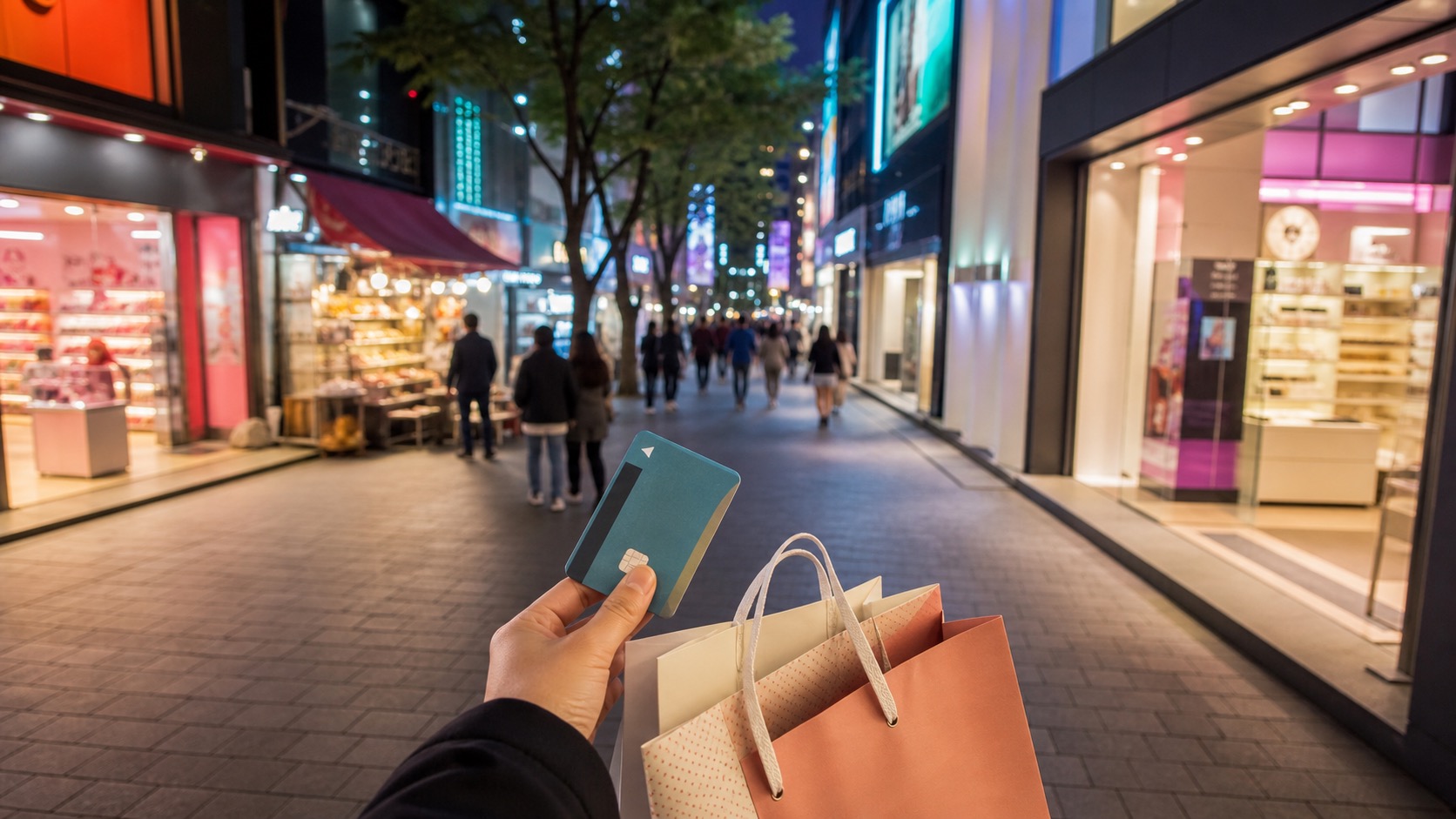
This is where “light shopping” fits. I do not mean a serious
product-hunting mission. I mean low-pressure browsing: Olive Young,
small snacks, socks, basic cosmetics, convenience-store drinks, and
anything you forgot to pack.
Myeongdong is useful because many shops are used to visitors. It is
also close to places first-timers often reach early in the trip. Visit
Seoul describes Myeongdong as a major shopping area, and that matches
how the streets feel at night: bright, busy, and easy to understand even
when your brain is still catching up.
If skincare shopping is one of your goals, do not try to solve every
product decision on the first evening. Start with the basics, then use
my Olive
Young Seoul shopping guide later when you have more energy.
First-night shopping should make the trip easier, not turn into a
two-hour debate in front of toner shelves.
If You Arrive Early
If you land in the morning and reach your hotel before check-in, do
not build a packed palace day immediately. Leave your luggage and choose
one gentle activity:
- Walk around Myeongdong and Namdaemun.
- Visit Namsan if the weather is clear.
- Sit in a cafe and reset your plan.
- Take a short walk along Cheonggyecheon if you are staying near
central Seoul.
This sounds modest, but it is often the right call. A first trip
improves when Day 2 starts with a rested brain.
If You Arrive Late
If you reach the hotel after dinner time, keep it even simpler.
Buy water. Confirm tomorrow’s subway route. Eat near the hotel. Save
your hotel address in English and Korean. Put your passport, cards, and
transit card in a consistent place. That is enough.
The goal of Day 1 is not to “use the day fully.” The goal is to make
the next two days easier.
Day 2:
Palaces, Bukchon, Insadong, and a Market Dinner
Day 2 is the classic Seoul day.
This is the day I would place Gyeongbokgung, Bukchon Hanok Village,
Insadong, Ikseon-dong, and possibly Gwangjang Market. They are not all
the same neighborhood, but they connect more naturally than mixing a
palace morning with Gangnam shopping and Hongdae nightlife.
Start with Gyeongbokgung Palace if you want the most iconic first
palace visit. Check the current operating days before you go, because
palace hours and closures can vary by season and site. Gyeongbokgung is
commonly closed on Tuesdays, and official palace pages are the safest
place to confirm details before your visit.
After the palace, move slowly toward Bukchon or Insadong.
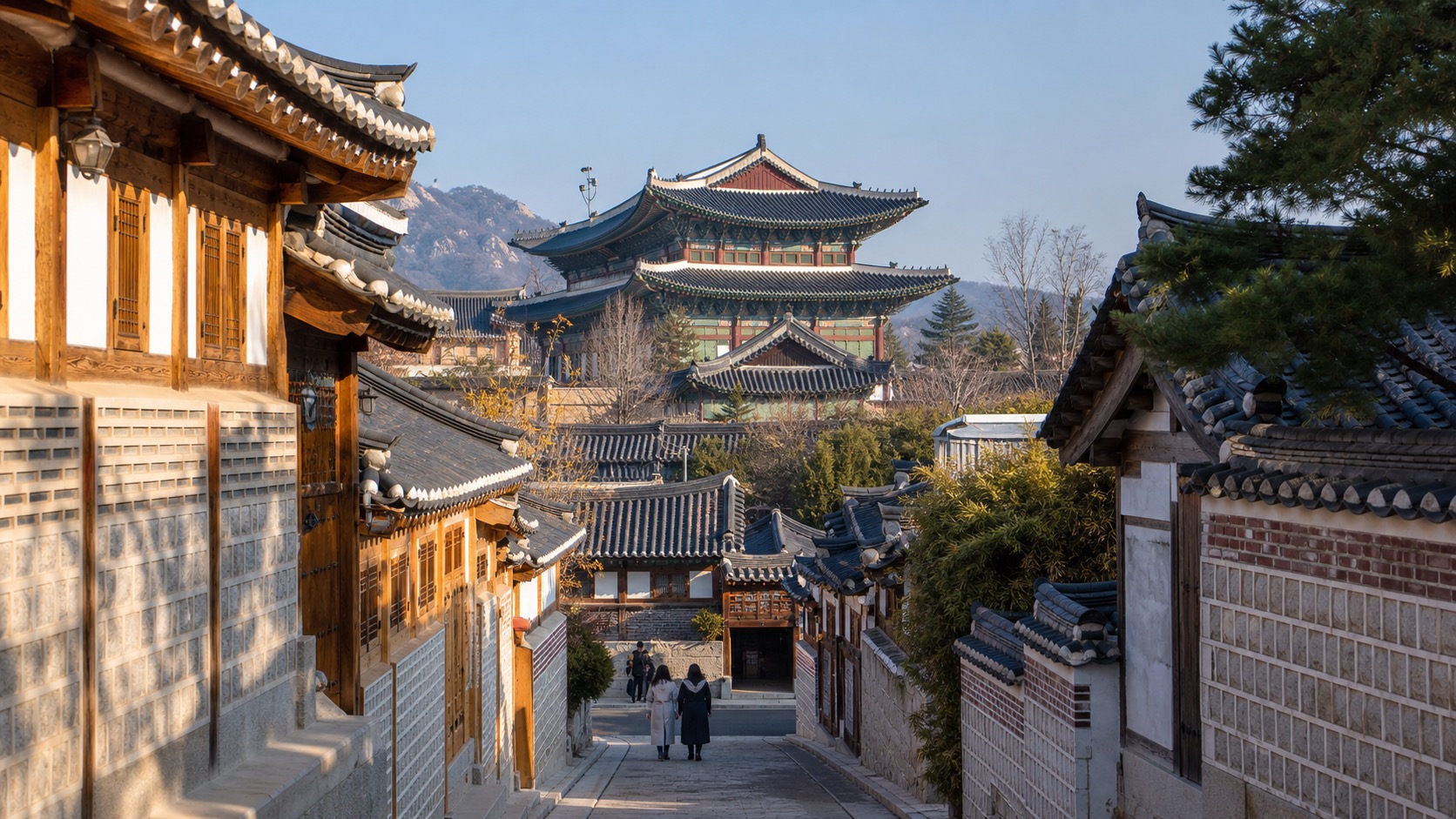
Bukchon Hanok Village is not a theme park. It is a residential area
with traditional hanok houses, small lanes, and views that many visitors
want to photograph. Visit quietly, avoid blocking doorways, and do not
treat private homes like photo props. If that sounds obvious, good. It
still needs saying because the area can get crowded.
From there, Insadong works well as a calmer transition. It is better
for traditional shops, tea, craft browsing, and a slower walk than for
dramatic sightseeing. I like this part of the day because it gives
first-time visitors a different pace from Myeongdong.
Suggested Day 2 Route
Here is a practical version:
| Time | Plan | Notes |
|---|---|---|
| Morning | Gyeongbokgung Palace | Start early if you dislike crowds |
| Late morning | Bukchon Hanok Village | Keep the visit quiet and respectful |
| Lunch | Insadong or nearby Jongno | Choose something simple rather than chasing a famous queue |
| Afternoon | Insadong and Ikseon-dong | Tea, small shops, alleys, cafes |
| Evening | Gwangjang Market or Myeongdong return | Market if you want energy; hotel area if you are tired |
You do not need to complete every stop. If the palace takes longer
than expected, skip one afternoon area. If the weather is bad, spend
more time indoors around Insadong. If you are traveling with family,
reduce the number of transitions.
The best version of Day 2 is not the longest version. It is the
version where the areas still feel connected.
Hanbok Rental: Worth It or
Not?
Hanbok rental can be fun, especially around Gyeongbokgung and
Bukchon. It can also slow down the day.
If photos are important to you, do it early and keep the rest of the
plan lighter. If you care more about seeing several areas comfortably,
skip hanbok on the first visit or keep it short.
My honest take: hanbok is worth it if you enjoy the experience
itself, not only because it is “what tourists do.” If you only have
three days and hate logistics, do not force it.
Dinner Option: Gwangjang
Market
Gwangjang Market is a common first-trip food stop because it is
lively, central, and easy to pair with Jongno-area sightseeing. It can
be crowded, and not every stall will feel equally comfortable for
first-time visitors. Go for the atmosphere, keep expectations realistic,
and do not feel pressure to eat a full meal if you only want a
snack.
If you are tired after the palace route, returning to your hotel area
for dinner is completely fine. A good itinerary includes an escape
route.
Day 3: Choose Your Modern
Seoul
Day 3 should not be one fixed route for everyone.
By the third day, you will usually know what kind of Seoul you want
more of. Some visitors want cafes and design shops. Some want nightlife.
Some want Gangnam, COEX, clinics, or beauty shopping. Some just want a
slower Han River walk.
So I would choose one of these four Day 3 routes.
Option A:
Seongsu for Cafes, Pop-Ups, and Modern Seoul
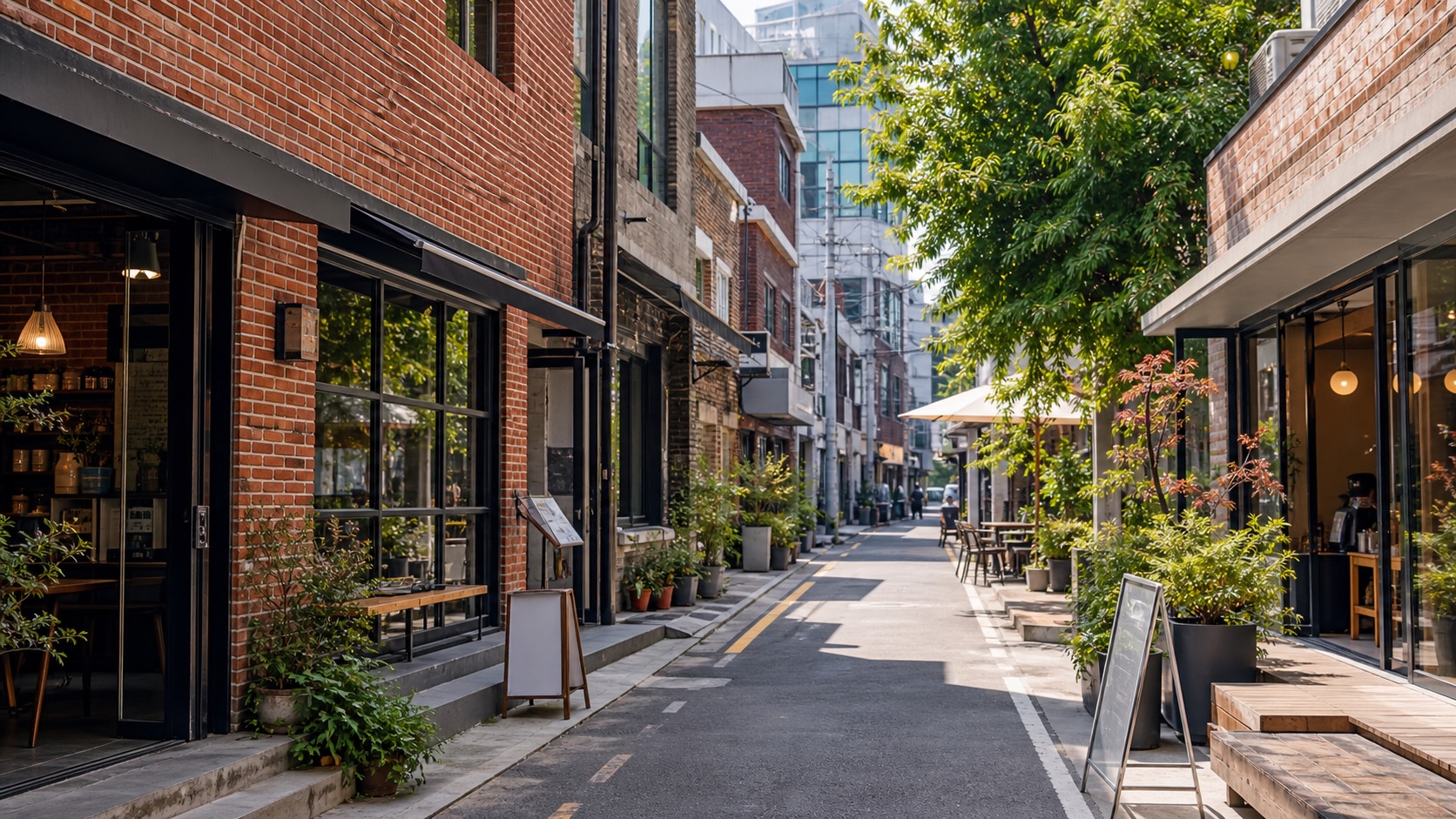
Choose Seongsu if you like cafes, design shops, pop-ups, and a
slightly industrial neighborhood feel. It is one of the areas where
modern Seoul changes quickly. That is also the catch: specific pop-ups
and trendy stores can change often, so I would not build the day around
one viral post unless you confirm it before visiting.
A good Seongsu day is simple:
- Late morning cafe
- Seoul Forest or nearby walk
- Lunch
- Shops and pop-ups
- Optional move toward Konkuk University, Ttukseom, or the Han River
depending on your energy
This is a good route if you want Seoul to feel current rather than
traditional.
Option B:
Hongdae for Youth Culture and Night Energy
Choose Hongdae if you want the day to become more active at
night.
Hongdae is better later in the day than early in the morning. Start
slowly, visit Yeonnam-dong or a cafe nearby, browse casual shops, then
let the area get busier after dinner. If you are traveling with friends,
this can be the most fun version of Day 3.
The tradeoff is noise and crowds. If you dislike crowded nightlife
streets, do not choose Hongdae just because it is famous.
Option C:
Gangnam and COEX for Polished Modern Seoul
Choose Gangnam if your trip includes clinics, beauty appointments,
COEX, shopping, or southern Seoul.
I live in Gangnam, but I do not automatically push first-time
visitors there. For a classic Seoul trip, Gangnam is not always the most
efficient base. For Day 3, though, it can make sense as a modern
contrast after the palace day.
A simple Gangnam route could be:
- COEX or Starfield Library
- Bongeunsa area
- Garosu-gil, Apgujeong, or Sinsa depending on your interests
- Dinner in Gangnam or nearby
Do not combine this with a heavy palace day. Gangnam works better
when you give it its own half-day or full day.
Option D: Han River and Slow
Seoul
Choose this if you are tired.
Three days in Seoul can be more tiring than expected. A slower final
day around the Han River, a cafe, a neighborhood walk, and one good
dinner may be better than chasing another five places.
This is especially useful if your flight leaves early the next
morning. You do not want your last full day to end with repacking at
midnight after too many subway transfers.
How to Adjust This
Itinerary by Hotel Area
If you stay in Myeongdong, this itinerary is the easiest to follow.
Day 1 and Day 2 are naturally close, and Day 3 can be your one longer
move.
If you stay in Hongdae, flip some of the rhythm:
- Day 1: Stay around Hongdae or Yeonnam-dong.
- Day 2: Do the palace and Jongno route.
- Day 3: Choose Myeongdong shopping or Seongsu/Gangnam.
If you stay in Gangnam, be realistic about north-of-river travel
time. You can still do this itinerary, but Day 2 will involve a longer
morning ride. That is why I usually recommend reading the where
to stay guide before booking.
What I Would Skip
on a First 3-Day Seoul Trip
For a first 3-day trip, I would skip anything that creates too much
distance or uncertainty unless it is your personal priority.
I would not force:
- A full DMZ tour plus a packed city evening.
- A far suburban cafe just because it looked good online.
- Multiple palace visits unless you love history.
- A same-day jump from Bukchon to Gangnam to Hongdae to
Myeongdong. - A day trip outside Seoul unless this is not really your first
Seoul-focused trip.
This is not because those places are bad. It is because three days
disappear quickly.
Good travel planning is partly about saying no.
Practical Tips Before You Go
Use T-money
Unless Your Transit Plan Is Very Heavy
For most first-time visitors, T-money is still the easiest default.
If your three days are packed with subway and bus rides inside Seoul,
Climate Card may be worth checking. I explain the tradeoff in the transportation
card guide.
Keep One Flexible Meal Each
Day
Do not reserve or pre-decide every meal. Seoul is full of small
choices, and your energy will change. Keep at least one meal flexible so
you can adapt to weather, queues, and where you actually are.
Check
Official Hours Before Palace or Museum Visits
For palaces, museums, and special exhibitions, check official pages
before you go. Hours, closures, ticket rules, and event schedules can
change. This itinerary gives the route logic, not a guarantee that every
site is open on your exact travel date.
Do Not Overtrust Map
Distance
Two places can look close and still feel tiring because of station
exits, hills, stairs, crowds, or transfers. If a route has several
subway transfers, assume it will take more energy than the map
suggests.
Leave Space for One
Unplanned Find
Some of the best Seoul moments are not headline attractions. A quiet
cafe, a small shop, a side street, or a meal you choose because you are
already nearby can make the trip feel more personal.
Build the itinerary, then leave it a little unfinished.
FAQ
Is three days enough for Seoul? Three days is enough
for a first taste of Seoul if you keep the itinerary focused. You can
cover arrival basics, one classic palace-and-old-Seoul day, and one
modern neighborhood day. Four or five days is more comfortable.
Where should I stay for this 3-day Seoul itinerary?
Myeongdong is the easiest base for this exact itinerary. Hongdae also
works if you prefer nightlife and cafes. Gangnam can work, but it adds
more travel time for palaces and old central Seoul.
Should I visit N Seoul Tower on a 3-day trip? N
Seoul Tower can fit on Day 1 if you arrive early or have energy after
Myeongdong. If you are tired, skip it. The tower is better as a pleasant
add-on than as a forced first-night task.
Should I go to the DMZ with only three days in
Seoul? Only if the DMZ is one of your top reasons for visiting
Korea. A DMZ tour can take a large part of the day, so it will replace
part of this itinerary rather than fit neatly inside it.
Is this itinerary good for families? Yes, but reduce
the number of transitions. For families, Day 2 should probably focus on
Gyeongbokgung, one nearby old street area, and an easy dinner. Do not
push every optional stop.
Final Thought
For a first Seoul trip, a good itinerary should make the city feel
easier, not smaller.
Use Day 1 to land well. Use Day 2 to see the classic side of Seoul.
Use Day 3 to choose the version of modern Seoul that actually interests
you.
If you want a wider starting point before building your schedule,
read the First
Time in Seoul guide. If you have a specific Seoul question or want
me to cover another route, send it through the Contact page.