Hi, I’m Bo, the local voice behind Seoul With Me. Money is not the most exciting part of trip planning, but it is the part that quietly decides whether your first few hours in Korea feel smooth or stressful. I have watched visitors stand at an airport exchange counter, exchange far too much cash at a bad rate, and then spend the rest of the trip carrying won they never needed because almost everything took a card anyway.
I get a version of the same question every time friends visit: “How much cash should I bring? Will my card work? Where do I change money?” So I sat down and worked through it the way I would for someone arriving next week.
The short version for 2026: Korea is close to a card-first country, so you need far less cash than most first-time visitors assume. Bring a travel card or a no-foreign-fee card, exchange a modest amount of cash for the few situations that still need it, and skip the airport exchange counter for large sums.
If you are still mapping out the basics, my First Time in Seoul guide covers the order of decisions, and my Incheon Airport to Myeongdong guide covers what to do the moment you land. This page is about the wallet side of all that.
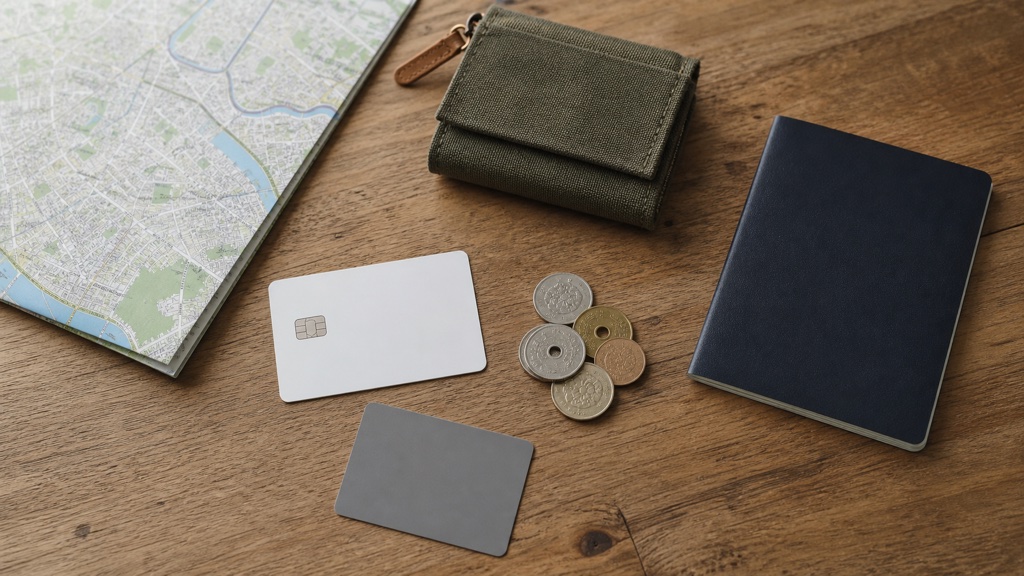
Quick Answer
| Question | Short Answer |
|---|---|
| Do I need a lot of cash in Korea? | No. Cards work almost everywhere. Keep some cash for small/cash-only spots. |
| Best place to exchange currency | City exchange offices (Myeongdong) or ATM withdrawals usually beat airport counters |
| Worst place to exchange large sums | Airport arrival-hall exchange counters |
| Best card type to bring | A travel card (Wise, Revolut) or a no-foreign-transaction-fee debit/credit card |
| How much cash to start with | Roughly 50,000-100,000 KRW for a few days, then withdraw more if needed |
| Do I tip in Korea? | No. Tipping is not expected and not part of the culture. |
| Rough exchange rate (2026, check live) | About 1 USD ≈ 1,300-1,400 KRW; rates move, so confirm before you exchange |
| Where to withdraw cash with a foreign card | ATMs marked “Global” at convenience stores and banks (look for the right logos) |
If you remember one line: carry a card for almost everything, a little cash for the exceptions, and do not panic-exchange at the airport.
Exchange rates move daily. The ranges in this guide are rough orientation for 2026, not live quotes. Always check the current rate before you exchange or withdraw.
Korean Currency Basics: The Won (KRW)
Korea’s currency is the South Korean won, written ₩ and abbreviated KRW. Prices are quoted in plain won, so the numbers look large at first. A simple coffee might be 4,500 won, a casual meal 9,000-13,000 won, a subway ride a little over 1,000 won. After a day, your brain adjusts.
A rough mental shortcut for 2026: drop the last three digits and you are roughly in US dollar territory (10,000 won is around 7-8 USD), but this is only a back-of-the-napkin trick. The real rate moves, so use a currency app for anything important.
Banknotes
There are four banknotes in everyday use:
- 1,000 won — blue, the smallest note
- 5,000 won — red/orange
- 10,000 won — green, the most common note for daily spending
- 50,000 won — yellow, the largest common note
The 50,000 won note is the one to be a little careful with. Some small vendors, taxis, or street stalls may not love breaking it for a tiny purchase, so it helps to keep a few 10,000 and 5,000 won notes for small payments.
Coins
Coins come in 10, 50, 100, and 500 won. In practice you mostly handle 100 and 500 won coins as change. They are useful for vending machines and coin lockers, but you will not collect many because so much is paid by card. Korea has also been moving toward a “coinless” habit in some shops, where change can be loaded onto a transit card instead of handed back in coins.
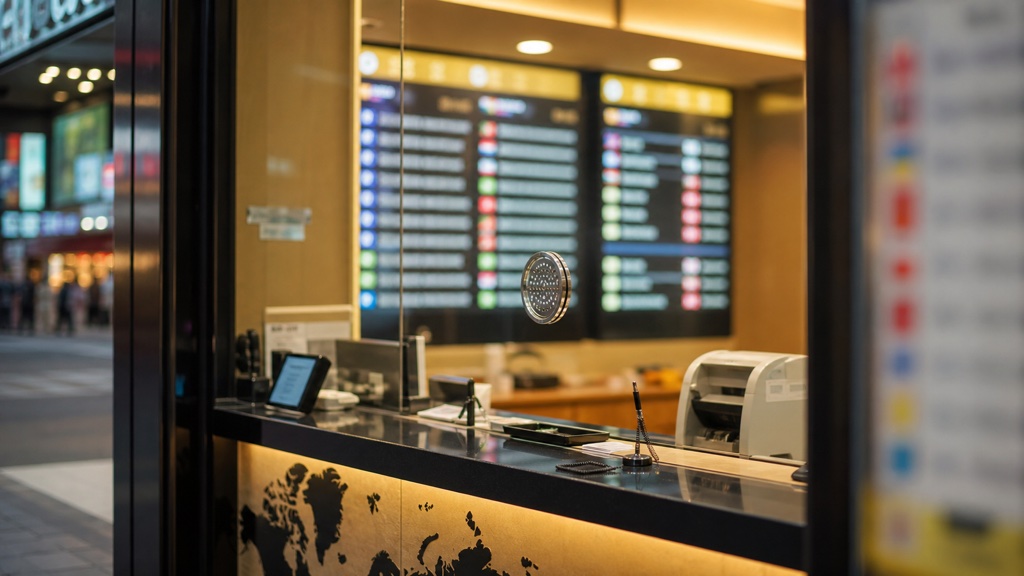
Where to Exchange Currency: Airport vs City vs Bank vs ATM
This is where visitors lose the most money for no reason. Here is how the main options actually compare.
| Method | Typical Rate | Convenience | When It Makes Sense |
|---|---|---|---|
| Airport arrival counters | Usually the worst rate | Highest | Only a small amount for the trip into the city |
| City exchange offices (Myeongdong, Itaewon, Hongdae) | Often the best cash rate | Medium | Larger cash amounts, once you are in the city |
| Banks | Fair, official rate | Lower (hours, lines) | Reliable but rarely the best deal for tourists |
| ATM withdrawal with travel card | Close to mid-market rate | High | Getting won as you go, without carrying a wad of cash |
Airport exchange: only what you need to get downtown
The exchange counters in the arrivals hall are convenient and that convenience is priced in. The rate is usually poor compared to the city. If you exchange here, exchange just enough to feel safe getting to your hotel — a small buffer for a snack, a backup taxi, or topping up a transit card. Do not exchange your whole budget at the airport.
In reality, you may not even need this step. You can pay for the Incheon Airport to Seoul route by card on the AREX train, and you can load a transit card with a foreign card at the airport. Cash at the airport is a comfort buffer, not a requirement.
City exchange offices: best for cash
The licensed money changers in areas like Myeongdong are popular with tourists for a reason: the cash rate is often noticeably better than the airport, and sometimes better than banks. You will see small storefront booths advertising rates on a board. Compare a couple, count your money before leaving the counter, and you are done.
This is the option I point friends to when they specifically want a larger amount of physical cash.
Banks: official but not the cheapest for tourists
Korean banks will exchange currency at the official rate, which is fair and transparent. The downsides for tourists are practical: limited hours, sometimes a wait, and a rate that is rarely better than a good Myeongdong booth. Banks are a fine fallback, not usually the best deal.
ATM withdrawals: often the quiet winner
If you carry a good travel card, withdrawing won directly from an ATM as you go can be the most efficient approach overall. You get close to the mid-market rate, you only take out what you need, and you skip the whole “how much should I exchange” guessing game. The catch is fees, which I cover below.
Cash vs Card in Korea: How Far a Card Really Goes
Korea is one of the most card-friendly countries you will travel in. A foreign Visa or Mastercard works in the large majority of places a tourist visits: department stores, chain cafes, convenience stores, most restaurants, taxis, hotels, and major shops. Contactless and chip payments are standard.
That said, “most” is not “all,” and the exceptions are exactly the charming places you came to Korea for.
Cash still matters for:
- Traditional markets like Gwangjang or Namdaemun, where many stalls are cash-only or prefer cash
- Street food vendors and small food trucks
- Some tiny, older restaurants and local mom-and-pop shops
- Topping up a T-money transit card at convenience store counters (cash is the safe assumption)
- A few small temples, rural spots, or day-trip stops outside the city
- Splitting bills casually with friends or small tips into a tip-free system (more below — short version: you do not tip)
Card is comfortable for:
- Convenience stores (CU, GS25, 7-Eleven, emart24)
- Chain cafes and most restaurants
- Department stores, Olive Young, malls, and large shops
- Taxis (most accept cards; Kakao T can charge your card)
- Hotels and most attractions
My honest local read: you can run a Seoul trip almost entirely on card and never feel stuck, as long as you keep a modest cash cushion for markets, street food, and transit top-ups.
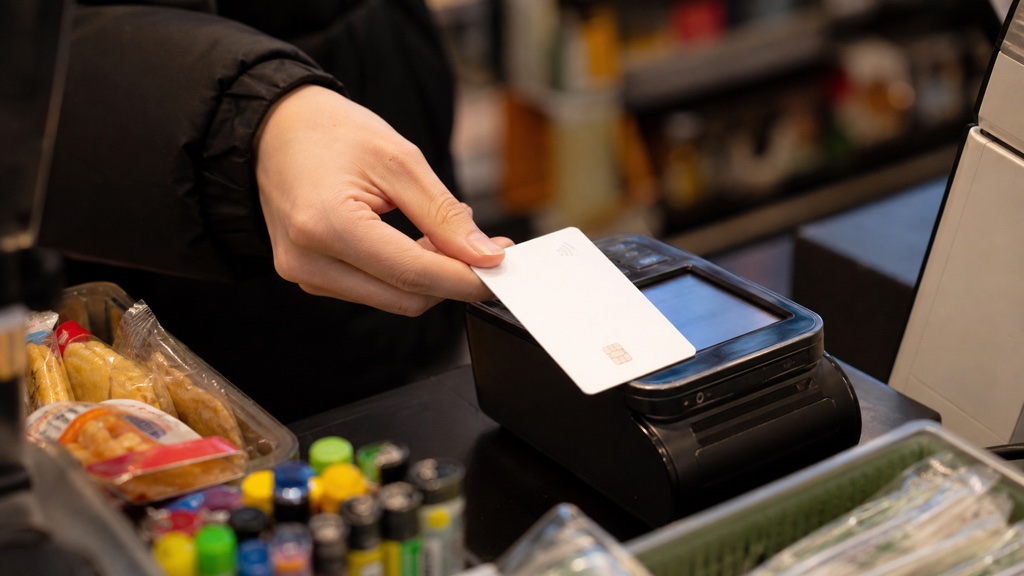
Travel Cards and Foreign Payment Cards That Actually Help
The single best money decision for a Korea trip is usually made before you fly: bring the right card.
No-foreign-transaction-fee cards. Many travel-oriented credit and debit cards charge no foreign transaction fee. If you already have one at home, it is often all you need for card payments in Korea. Always choose to be charged in Korean won, not your home currency, when a terminal asks — “dynamic currency conversion” in your home currency almost always gives you a worse rate.
Wise. A Wise account and debit card let you hold and spend in won at close to the mid-market rate, with transparent fees. It is a popular choice for travelers who want predictable costs and easy ATM withdrawals abroad.
Revolut. Revolut works similarly for many travelers, with multi-currency spending and fee structures that vary by plan and region. Check your home-country terms before relying on it.
Travel Wallet (트래블월렛). This is a Korea-based travel card app that locals and visitors use for foreign-currency spending. For inbound tourists the home-country travel cards above are usually simpler, but if you end up with a Korean-issued option it can be handy for tapping transit and small payments.
The practical setup I would suggest: one travel/no-fee card as your main payment method, a second card as a backup in a different pocket, and a small amount of cash. Cards can occasionally be declined, machines can be temperamental, and having a backup means a single glitch never ruins a day.
Card fees, exchange rates, and account terms differ by provider and by your home country. Confirm your specific card’s foreign-use fees and ATM policy before you travel.
Using ATMs in Korea with a Foreign Card
Not every Korean ATM accepts foreign cards, which surprises first-time visitors. The trick is knowing which ones do.
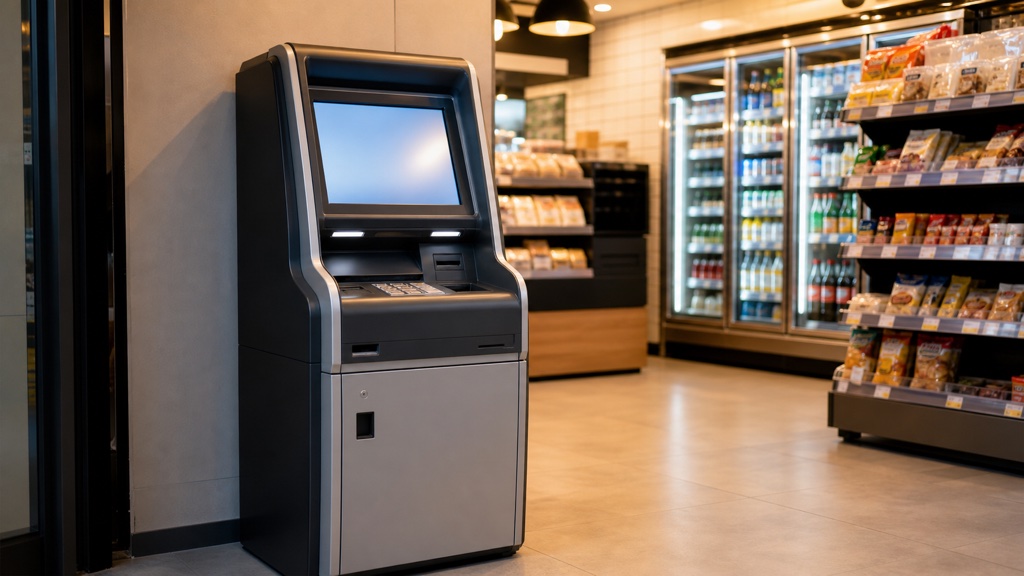
Look for ATMs labeled “Global” or showing your network logos (Visa/PLUS, Mastercard/Cirrus, Maestro). Reliable options include:
- Convenience store ATMs, especially those branded for global cards. Machines in CU, GS25, and 7-Eleven often accept foreign cards and have an English menu.
- Bank ATMs at major banks, particularly those marked “Global ATM.” Some bank machines only work with domestic cards, so check the labels.
- Airport ATMs in the arrivals area, useful for a first small withdrawal.
On the fees, expect two possible layers:
- A local ATM fee charged by the machine (often a few thousand won per withdrawal).
- Your home bank’s foreign withdrawal fee, which is where travel cards like Wise can save you money.
Because each withdrawal can carry a fixed fee, fewer, larger withdrawals usually cost less in total than many small ones — balanced against not wanting to carry too much cash at once. If a machine offers to convert to your home currency, decline and choose to be charged in won for a better rate.
A quick reality check from helping visitors: many ATMs have a per-transaction limit, English menus reset to Korean on the next screen sometimes, and some machines keep banking hours even though they are inside a 24-hour store. If one machine refuses your card, try a different brand before assuming your card is the problem.
When You Actually Need Cash
To make this concrete, here are the situations where I would make sure I had won in my pocket:
- Transit card top-ups. Loading a T-money card at a convenience store counter is smoothest with cash. My Seoul Transportation Card Guide explains the card choices; just know that recharging is a cash-friendly task.
- Traditional markets and street food. This is the most common cash moment for tourists. Gwangjang Market hotteok, tteokbokki stalls, a quick bite at Namdaemun — cash keeps it simple.
- Small local restaurants. Some older or tiny places are cash-preferred even if they technically take cards.
- Coin lockers and some vending machines, though many now take cards or transit cards too.
- Day trips and rural stops, where card acceptance can be thinner than in central Seoul.
For a few days in Seoul, 50,000-100,000 KRW in cash is usually a comfortable starting cushion, refilled by ATM if you run low. Adjust up if you plan a lot of market food or day trips, down if you are mostly doing card-friendly malls, cafes, and restaurants.
Daily Budget Guide for Seoul
Costs vary by season, neighborhood, and how you travel, so treat these as planning ranges, not fixed prices. They cover a normal day of food, local transport, and activities per person, with lodging shown separately.
| Budget Level | Food (per day) | Local Transport | Activities | Lodging (per night) |
|---|---|---|---|---|
| Backpacker | 20,000-35,000 KRW | 3,000-6,000 KRW | 0-10,000 KRW | 25,000-50,000 KRW (hostel/guesthouse) |
| Mid-range | 40,000-70,000 KRW | 5,000-10,000 KRW | 10,000-30,000 KRW | 90,000-180,000 KRW (3-4 star hotel) |
| Comfort/Luxury | 90,000 KRW and up | taxis 15,000+ KRW | 30,000 KRW and up | 250,000 KRW and up (4-5 star) |
A few notes from living here:
- Food has a huge cheap-to-fancy range. A gimbap-and-soup lunch can be under 8,000 won; a Korean BBQ dinner for two with drinks easily passes 60,000-80,000 won. You can eat very well on a modest budget if you mix in casual meals.
- Transport is genuinely cheap. Subway and bus rides are a little over 1,000 won each, so even a busy day rarely breaks 6,000-8,000 won unless you take taxis. Taxis are reasonable by global-city standards but add up fast.
- Many top sights are free or cheap. Palaces, markets, parks, and neighborhood walking cost little. Big-ticket items (theme parks, shows, fancy cafes) are where activity spend climbs.
- Convenience stores are a budget superpower. A surprisingly good meal of triangle gimbap, instant noodles, and a drink can run well under 10,000 won.
As a rough all-in daily figure excluding lodging: a careful backpacker can do 30,000-50,000 KRW/day, a comfortable mid-range traveler 80,000-130,000 KRW/day, and a luxury day runs well past 200,000 KRW/day once you add taxis and nicer meals.
Tipping in Korea: You Do Not Tip
Let me be direct, because this confuses a lot of visitors: Korea does not have a tipping culture. You do not tip at restaurants, cafes, bars, taxis, or hotels as a rule. Prices are the prices. Restaurant bills do not expect an added gratuity, and leaving coins on the table can even cause a confused “you forgot your change” moment.
There is no tip line you are expected to fill in on a card terminal the way there is in some countries. Service staff are paid wages, not tip-dependent, and trying to over-tip can feel awkward rather than generous.
The narrow exceptions: some high-end international hotels may add a service charge to the bill automatically (you do not add more on top), and a private tour guide or driver might appreciate a small thank-you in cash if you genuinely loved the experience — but even that is optional, not expected. For everyday Seoul, pay the listed amount and move on. It is one of the small things that makes spending here pleasantly predictable.
Tax Refund for Tourists (Quick Version)
Foreign visitors can get a tax refund on eligible purchases at participating stores, which is worth knowing if you plan any real shopping. According to VisitKorea’s tax refund guide, eligible purchases generally start at 15,000 KRW, the goods should be new and unused, and you should take them out of Korea within three months. Many stores offer immediate refund at the register within set transaction limits; otherwise you claim at the airport before departure.
I cover the on-the-ground version of this — including how it works at the register and what to do at the airport — in my Olive Young Seoul shopping guide, since beauty shopping is where most visitors first run into it. If you are buying anything substantial, ask “Tax refund?” before you pay, and keep your passport handy.
Money Mistakes and Scams to Avoid
Korea is a very safe place to handle money, and outright scams are rare compared to many travel destinations. The “mistakes” here are mostly self-inflicted and easy to avoid.
Exchanging too much at the airport
The most common money waste. Change a small amount at the airport if you want a buffer, then use city exchange offices or ATMs for the rest.
Choosing your home currency at the terminal
When a card machine or ATM asks whether to charge in won or your home currency, always choose won. Home-currency conversion (DCC) bakes in a worse rate. This single habit saves real money over a trip.
Carrying more cash than you need
Because Korea is card-first, big cash withdrawals often end with leftover won you scramble to spend or re-exchange at a loss before flying home. Withdraw in sensible amounts.
Relying on a single card
Bring a backup card in a separate pocket. Cards get declined, demagnetized, or temporarily blocked by fraud systems when they see foreign activity. Tell your bank you are traveling if your bank still requires that.
Assuming every ATM takes foreign cards
Use “Global” ATMs and check for your network’s logo. A declined card at one machine usually means wrong machine, not a dead card.
Forgetting small bills and a little cash for markets
The one place “card only” travelers get stuck is street food and traditional markets. Keep some 1,000 and 5,000 won notes for exactly those moments.
FAQ
How much cash should I bring to Korea? Less than you think. Korea is card-first, so 50,000-100,000 KRW for the first few days is plenty for most travelers, refilled by ATM if needed. Bring a no-foreign-fee or travel card as your main payment method.
Where is the best place to exchange money in Seoul? City exchange offices in areas like Myeongdong usually offer better cash rates than airport counters. For convenience without carrying lots of cash, withdrawing won from a “Global” ATM with a travel card is often the most efficient option.
Can I use my foreign credit card everywhere in Korea? In most places, yes — convenience stores, restaurants, cafes, taxis, hotels, and large shops widely accept foreign Visa and Mastercard. Keep some cash for traditional markets, street food, transit top-ups, and small local spots.
Do I tip in Korea? No. Tipping is not part of Korean culture. You pay the listed price at restaurants, cafes, taxis, and hotels. Some luxury hotels may add a service charge automatically, but you do not add a tip on top.
What is the exchange rate for Korean won in 2026? As a rough orientation, 1 USD has been around 1,300-1,400 KRW in 2026, but rates change daily. Always check a live rate before you exchange or withdraw.
Which ATMs in Korea accept foreign cards? Look for ATMs labeled “Global” or showing Visa/PLUS, Mastercard/Cirrus, or Maestro logos. Convenience store ATMs (CU, GS25, 7-Eleven) and major bank “Global ATMs” commonly work, usually with an English menu.
Should I get a Wise or Revolut card for Korea? A travel card like Wise or Revolut can give close to mid-market rates and cheaper ATM withdrawals, which suits Korea well. A no-foreign-transaction-fee card from your home bank can work just as well. Confirm your specific card’s fees before relying on it.
Can I get a tax refund as a tourist in Korea? Yes, on eligible purchases (generally from 15,000 KRW) at participating stores, for goods taken out of Korea within three months. Ask about tax refund before paying and keep your passport with you.
My Take
If a friend texted me before flying to Seoul and asked only one thing about money, I would not start with exchange rates. I would say: bring a good travel card, choose “won” at every terminal, and only exchange a small amount of cash for markets and transit top-ups. That alone solves most of the money friction first-time visitors run into.
Korea makes spending easy in a way that rewards travelers who do not over-prepare with cash. The mistakes I see are almost never “ran out of money in a dangerous spot” and almost always “exchanged too much at the airport at a bad rate” or “got charged in dollars instead of won.” Both are completely avoidable.
So pack light on cash, carry a card you trust plus a backup, keep a few small bills for street food, and enjoy the fact that you will never have to do tipping math here. That is the local advice, and it is the version I actually give my friends.
Rating: a card-first approach with a small cash cushion is 5/5 for almost every first-time Seoul trip
Best for card: Everyday spending, restaurants, cafes, shops, taxis, hotels Best for cash: Traditional markets, street food, transit top-ups, small local spots My simple rule: Card for almost everything, a little cash for the exceptions, and never exchange your whole budget at the airport.
Want me to cover another Seoul or Korea travel question? Send a request through the Contact page.