Hi, I’m Bo, the local voice behind Seoul With Me. Hongdae is the neighborhood I hesitate to recommend without a conversation first — not because it isn’t worth visiting, but because “Hongdae” means four or five different things depending on what time you show up and which direction you walk. A quiet brunch in Yeonnam-dong and a 2 AM club street are technically the same neighborhood, and plenty of visitors plan for one and accidentally get the other.
So this guide is organized the way I actually explain Hongdae to friends visiting Seoul: what the area really is, how the food and cafe scene splits by street, where the shopping is actually good, and how to handle the nightlife side without wasting your evening in the wrong alley.
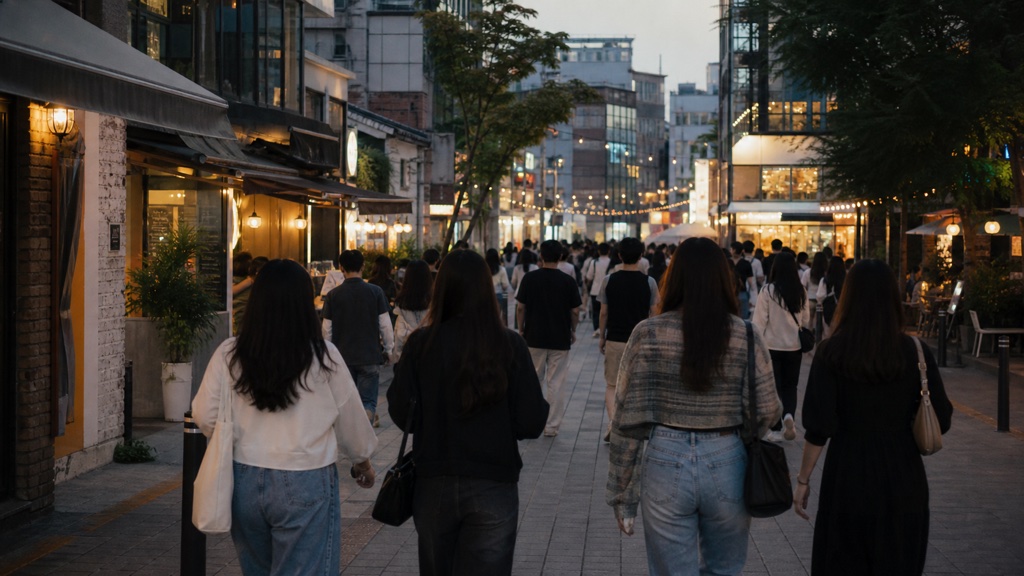
Four Neighborhoods Wearing One Name
Hongdae (홍대) takes its name from Hongik University, Seoul’s best-known art and design school, and the student energy is still the neighborhood’s foundation. But when people say Hongdae today, they usually mean a much larger zone in western Seoul that includes the main pedestrian streets in front of the university, the calmer cafe blocks of Yeonnam-dong to the north, and the more grown-up bar streets of Sangsu and Hapjeong to the south.
That geography matters more here than in most Seoul neighborhoods, because the atmosphere changes block by block:
- The core walking streets (between Hongik Univ. Station Exit 9 and the university gate) are the loud, dense version of Hongdae — street food, cosmetics shops, arcades, buskers, and crowds that build from late afternoon.
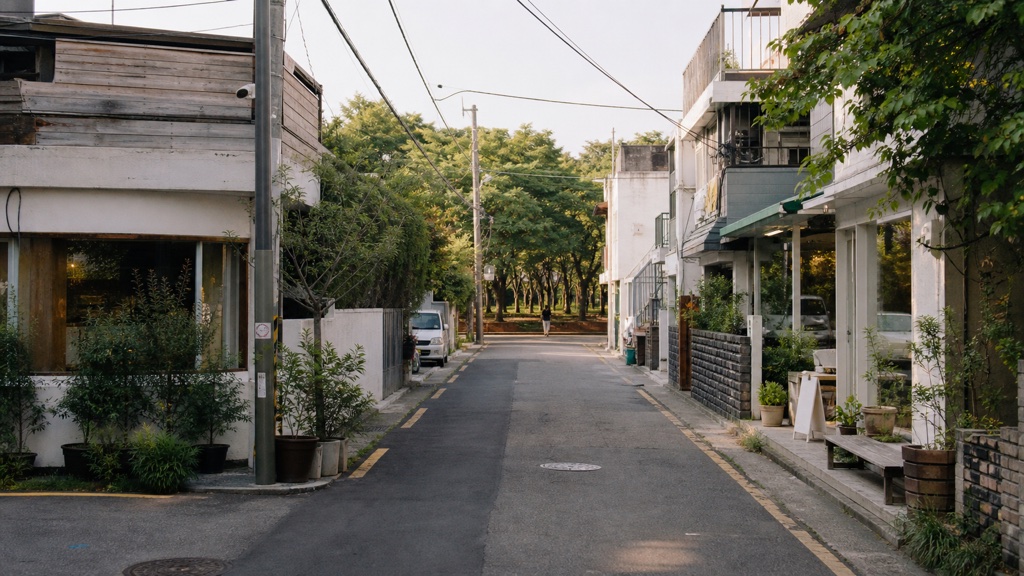
- Yeonnam-dong, along the Gyeongui Line Forest Park (a converted rail-line park locals call “Yeontral Park”), is the brunch-and-cafe version — low-rise houses turned into cafes and small restaurants, at maybe half the volume of the main streets.
- Sangsu and Hapjeong are where the bars get quieter and the average customer age goes up a few years. If the main drag feels like a festival, Sangsu feels like a neighborhood that happens to have very good bars.
None of these are more “real” than the others. But if you only have one evening, knowing which version you want is the difference between a great night and a confused one.
Getting There (and Why It’s Easy from the Airport)
Hongik University Station (홍대입구역) is the main gateway, and it’s unusually well connected: Line 2 (the green circle line), the Gyeongui-Jungang Line, and — most useful for arriving travelers — the AREX airport line all stop here. If you’re flying into Incheon, Hongdae is one of the few major nightlife-and-food neighborhoods you can reach from the airport without a single transfer, which is a big part of why so many first-time visitors choose to stay here.
Exit 9 is the one everyone means when they say “meet at Hongdae Station” — it feeds directly into the main pedestrian street. Expect a crowd around the exit itself on weekend evenings; it’s the default meeting point for half of western Seoul.
For Yeonnam-dong, Exit 3 puts you at the head of the Gyeongui Line Forest Park. For Sangsu and Hapjeong, you can walk south from the main streets in about 10–15 minutes, or use Sangsu Station (Line 6) and Hapjeong Station (Lines 2 and 6) directly.
If you haven’t sorted out your transit card yet, the Seoul transportation card guide covers T-money versus the Climate Card — for a Hongdae-based stay with an airport arrival on AREX, T-money on arrival is the simpler setup.
Eating in Hongdae: How the Food Scene Splits
Hongdae’s food scene runs on student budgets and late hours, which shapes what it does well: the neighborhood is strongest at casual Korean staples, street food, and international options priced for people in their twenties. This is not where I send people for a refined hansik (Korean full-course) dinner — it’s where I send them to eat well at 11 PM without a reservation.
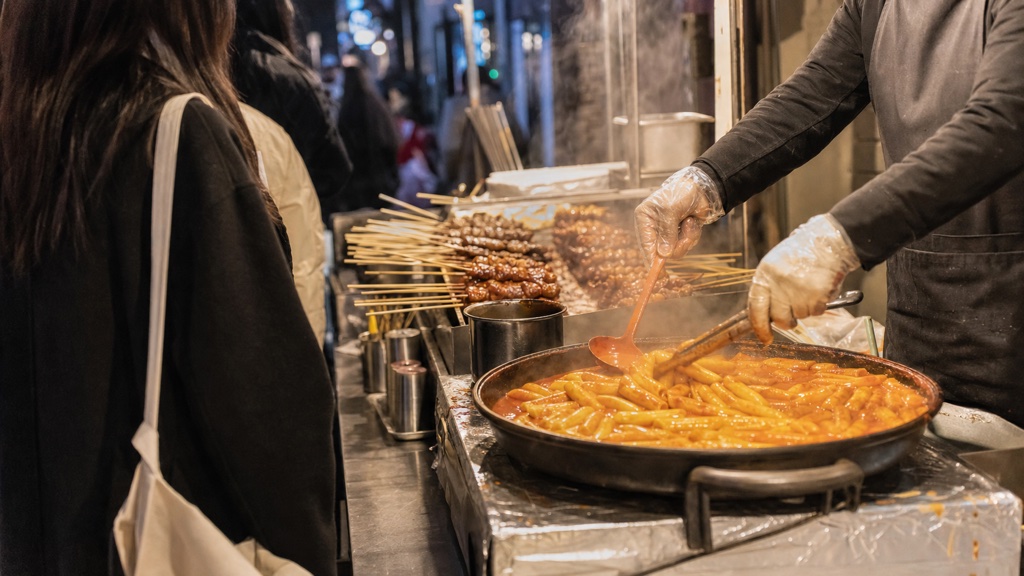
On and around the main streets, you’ll find the high-turnover crowd-pleasers: Korean fried chicken with beer (chimaek), budget Korean BBQ where the price per serving of pork belly is posted in the window, tteokbokki (spicy rice cakes) and hotteok (filled pancakes) from street stalls, and a rotating cast of trend foods — whatever is currently viral tends to open its first or second branch in Hongdae. Quality is more variable here than anywhere else in the neighborhood; a good rule of thumb is that a line of local students means more than a big English sign.
Yeonnam-dong is the opposite pattern: slower, smaller, and better for daytime. Brunch cafes, Japanese-style curry and udon shops, small pasta places run by one or two people, and some of the city’s more interesting single-menu restaurants — places that make exactly one dish and stand or fall on it. Weekend brunch hours get busy (11 AM–1 PM especially), and small shops here genuinely do sell out and close early when they run out of ingredients. Checked as of early 2026, most Yeonnam spots I pass regularly post their sold-out notices on Instagram stories rather than their doors, which is worth knowing before you walk twenty minutes for a specific restaurant.
Sangsu and Hapjeong lean toward dinner-and-drinks combinations: izakaya-style bars, Korean pubs (hof) with proper anju (drinking food), and a growing number of natural wine spots. Prices run a notch higher than the student streets, and the food is generally more consistent.
One general note on cost: Hongdae remains one of the better-value food areas among Seoul’s major tourist neighborhoods. A filling casual meal on the main streets is still commonly in the 8,000–12,000 KRW range as of early 2026, though trend-driven spots charge whatever the trend allows.
The Cafe Side: Main Streets vs. Yeonnam-dong
Hongdae helped invent Seoul’s theme-cafe culture, and the main streets still carry that DNA — character-brand cafes, board game cafes, and photo-driven dessert shops aimed at students and tourists. They’re fun, but most are built for a 45-minute visit and a phone camera.
The cafes I’d actually plan time around are mostly in Yeonnam-dong. The blocks on either side of the Gyeongui Line Forest Park are one of Seoul’s densest concentrations of independent coffee shops — small roasters, home-converted cafes with four tables, and dessert specialists doing one thing (a specific cake, a specific bake) very well. It’s a different ecosystem from Seongsu’s warehouse-scale cafes: where Seongsu impresses with space and design, Yeonnam wins on intimacy and coffee quality per square meter.
Practical notes from more afternoons here than I can count:
- Yeonnam cafes are small. Groups of four or more will struggle for seating on weekends; two people can almost always squeeze in somewhere.
- Laptop culture varies. Some cafes welcome it, others post no-study signs during busy hours. The four-table home-style cafes are generally not the place to camp for three hours.
- The park itself is part of the experience — on a decent-weather afternoon, buying a coffee to go and walking the Gyeongui Line Forest Park is a legitimately nice hour, and free.
Shopping: Vintage, K-Fashion, and What to Skip
Hongdae shopping has a distinct personality: it’s younger, cheaper, and more secondhand-driven than anywhere else on the standard tourist route.
Vintage and thrift stores are the neighborhood’s real shopping strength. The area between the main walking streets and the university gate — and spilling toward Sangsu — has dozens of used-clothing shops, from curated (and priced accordingly) vintage boutiques to dig-through-the-racks stores where most items sit under 20,000 KRW. If secondhand fashion is your thing, this is the best concentration in central Seoul.
Independent K-fashion fills the main streets: small brands and no-brand shops selling current Korean streetwear at student prices. Sizing runs Korean-standard (small), and fitting rooms can be limited in the cheaper shops, so check return policies if you’re unsure — many small shops here are exchange-only.
Character and stationery shops cluster near the station and along the main drag. Fine for souvenirs and gifts, and generally cheaper than the tourist-priced equivalents in Myeongdong.
What I’d skip: the generic cosmetics roadshops on the main street are the same chains you’ll see everywhere in the city, often at the same or worse prices than an Olive Young run handles more efficiently. Hongdae’s shopping value is in the things you can’t get elsewhere — the vintage racks and the small local brands — not the chains.
Nightlife: How a Hongdae Night Actually Works
This is what Hongdae is most famous for, and also where visitor expectations go wrong most often. A few things worth knowing before you commit your evening:
The night has phases. Early evening (6–9 PM) is dinner and busking hour — the main streets and the busking zone near the university gate are at their most family-friendly. From around 10 PM the bar streets fill, and the club scene doesn’t meaningfully start until midnight; showing up to a club at 10:30 PM means paying a cover to stand in a warming-up room. Peak club hours run roughly 1–4 AM, which conveniently overlaps with the subway being closed (it stops around midnight and restarts around 5:30 AM). Plenty of people intentionally stay out until the first train — it’s a Seoul rite of passage — but know that’s the trade before you start, or budget for a taxi that will be in heavy demand at 2 AM on a Saturday.
Bring your passport, not a photo of it. Clubs and some bars check ID at the door, and foreign visitors are routinely asked for a physical passport — a phone photo gets rejected often enough that I wouldn’t risk it. Most clubs are 19+ by Korean age reckoning; door staff don’t debate edge cases.
Busking is the free show. The busking zone near the main street stage area runs most evenings in decent weather, heaviest on Friday and Saturday. Quality ranges from first-timers to acts with real followings, and it costs nothing to stand there with a street snack and watch. Honestly, if clubs aren’t your scene, busking hour plus a long dinner is a complete Hongdae evening on its own.
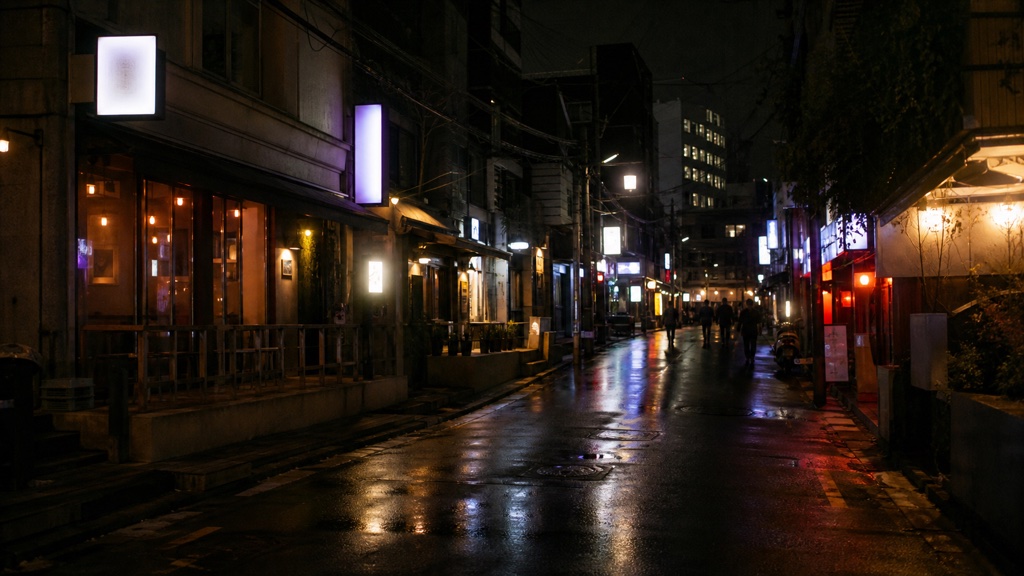
If loud isn’t your goal, drift south. Sangsu and Hapjeong bars let you drink well and still hear your own conversation, and they stay open plenty late. This is the version of Hongdae nightlife I personally use at this point — my club years and I have reached an amicable separation.
When to Go (and When Not To)
For food and cafes: weekday afternoons are the sweet spot — Yeonnam-dong is calm, the main streets are navigable, and you can actually get seats. Weekend brunch in Yeonnam means waiting.
For shopping: most vintage and fashion shops open late morning to noon and run into the evening. Weekday visits mean less competition at the racks.
For the full nightlife experience: Friday and Saturday, obviously — but that’s also when crowds, club covers, and 2 AM taxi shortages peak. A Thursday night gets you 80% of the energy with noticeably less friction.
When not to go: weekend afternoons if crowds drain you. Saturday from about 4 PM onward, the main streets become a slow-moving river of people, and the neighborhood’s charm-to-congestion ratio drops fast. That’s the window I’d spend in Yeonnam-dong or save for a different neighborhood entirely.
FAQ
Is Hongdae worth visiting if I don’t club or drink? Yes — arguably the daytime version of Hongdae (Yeonnam-dong cafes, vintage shopping, street food, evening busking) is the better half of the neighborhood anyway. The club scene is one slice of Hongdae, not the whole thing.
Hongdae or Myeongdong for a first-time visitor — which is better? Different jobs. Myeongdong is more efficient for cosmetics shopping and tourist logistics; Hongdae is better for atmosphere, food variety, and actually feeling like you’re in a living Seoul neighborhood. If your trip allows, do Myeongdong as an errand and Hongdae as an evening.
Is Hongdae safe at night? By big-city standards, yes — the streets are crowded and well-lit deep into the night, and the main risks are the universal nightlife ones (overpriced drinks, the occasional aggressive club promoter) rather than street safety. Solo travelers, including women, are a normal sight here at night, though the usual late-night judgment applies.
How do I get back to my hotel after the subway closes? The subway stops around midnight and restarts around 5:30 AM. Between those hours it’s taxis (expect surge-level demand at 2–3 AM on weekends, and use Kakao T rather than street-hailing), a few night bus routes, or the time-honored option of staying out until the first train.
How much time should I plan for Hongdae? A focused visit — one meal, a cafe, a walk through the shopping streets — fits in three to four hours. If you want the full arc from afternoon cafes through evening busking to late-night bars, it’s a genuine full-day-into-night neighborhood.
Which subway exit should I use? Exit 9 of Hongik University Station for the main walking streets and busking zone; Exit 3 for Yeonnam-dong and the Gyeongui Line Forest Park; Sangsu Station (Line 6) for the quieter southern bar streets.